
Sciatica
17 Sept 2026 · 4 min read
On this page12 sections
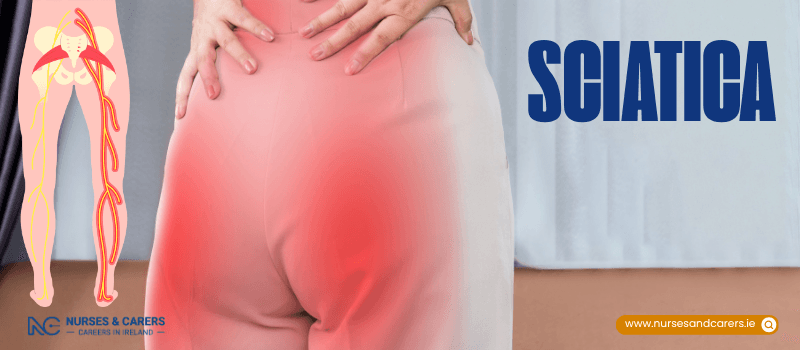
Sciatica occurs when the sciatic nerve—which extends from your lower back down to your feet—becomes irritated or compressed. While it commonly improves within 4 to 6 weeks, the discomfort can sometimes last longer.
Emergency Action Required
Do not drive yourself. Have someone else drive you or call 999 or 112 for an ambulance immediately if your sciatica is accompanied by any of the following symptoms:
Sciatica pain affecting both sides of your body simultaneously.
Severe or rapidly worsening weakness or numbness in both legs.
Numbness around or under your genitals, or around your anus (saddle anaesthesia).
New, abnormal difficulty urinating, an inability to pass urine, or a loss of bladder control.
A loss of bowel control or a sudden inability to feel when you need to pass stool.
Note: These are warning signs of a medical emergency (such as Cauda Equina Syndrome) that requires immediate hospital treatment. Bring your current medications with you [1].
Symptom Identification
Sciatica typically causes symptoms in your bottom, the back of your leg, and into your feet and toes. These areas may experience:
Stabbing, burning, or shooting pain.
A tingling sensation resembling pins and needles.
Physical numbness or muscle weakness.
Note: Symptoms often intensify when moving, coughing, or sneezing. You may experience concurrent back pain, but the pain in your leg, foot, or bottom is characteristically more severe. Isolated back pain is generally not sciatica [1].
Common Causes
Sciatica is triggered when something rubs against or presses on the nerve path. Typical causes include:
A Slipped Disc: The most frequent cause, occurring when a soft tissue cushion between your spinal bones bulges outward.
Spinal Stenosis: A physical narrowing of the spinal column passage through which the nerves travel.
Spondylolisthesis: When one of the spinal bones slips forward out of its normal position.
Physical Trauma: A direct back injury.
Recovery and Self-Care Strategies
Do's | Don'ts |
|---|---|
Maintain normal activities and keep moving as much as possible. | Do not stay bedridden or sit still for prolonged periods, as inactivity delays recovery. |
Perform targeted sciatica exercises and gentle stretches. | Do not use hot water bottles to ease pain; if your skin is numb, you risk accidental scalding. |
Apply commercial heat packs to the painful areas to soothe spasms. | Do not lift heavy objects without using proper, safe lifting techniques. |
Place a firm cushion between your knees when sleeping on your side. | |
Prop firm pillows under your knees when resting flat on your back. |
Over-the-Counter Pain Relief
Speak to your pharmacist or GP regarding medication. Standard paracetamol used in isolation is often ineffective for nerve pain; healthcare professionals frequently recommend Non-Steroidal Anti-Inflammatory Drugs (NSAIDs) instead.
Long-Term Prevention
To reduce the likelihood of sciatica recurring, implement these preventative habits:
Stay Active: Incorporate regular physical exercise into your weekly routine.
Maintain Posture: Ensure proper spinal alignment when standing, sitting, and working at a computer.
Manage Weight: Take steps to lose excess body weight to reduce structural pressure on your spine.
Stop Smoking: Seek professional support to quit smoking, as nicotine usage statistically increases the risk of developing sciatica.
When to See a GP (Non-Emergency)
Schedule a routine consultation with your GP if your pain:
Fails to improve after a few weeks of consistent home management.
Progressively worsens over time.
Prevents you from performing your normal daily activities.
Medical and Specialist Treatments
If conservative self-care is insufficient, a GP can prescribe specialized nerve-pain medications, suggest specific clinical stretches, or refer you to the following pathways:
First-Line Referrals: Physiotherapy for targeted manual therapy and massage, or psychological support to help develop cognitive coping mechanisms for chronic pain.
Advanced Medical Interventions: For severe, unresolving pain, a specialist may recommend localized painkilling injections, nerve ablation procedures to block spinal pain signals, or decompression surgery (such as a microdiscectomy).
Disclaimer
The information provided here is for educational and informational purposes only. It does not constitute medical advice, diagnosis, or treatment. Always consult a qualified healthcare professional or your GP for specific medical concerns, diagnoses, or health advice. Never disregard professional medical advice or delay seeking it because of information you have read here.