
Bowel Cancer
4 Sept 2026 · 23 min read
On this page47 sections
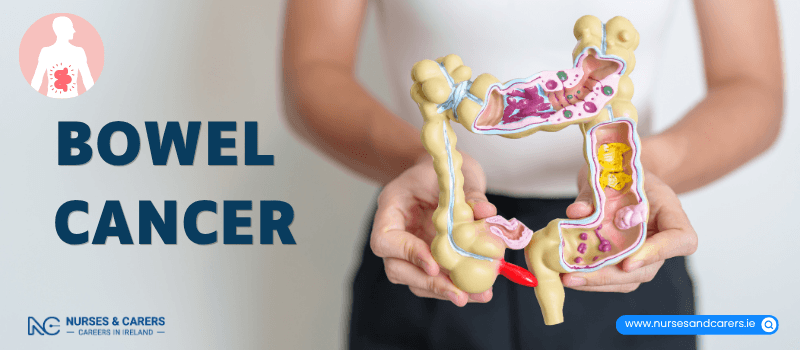
Bowel cancer—also called colorectal, colon, or rectal cancer—develops in the large intestine and is one of the most common cancers in Ireland. It is the second most common cancer in Irish men and the third most common in Irish women, primarily affecting people over 60, though it can occur at any age.
Symptoms of Bowel Cancer
You may experience one or more of the following warning signs:
Bowel changes: Persistent, unusual shifts in your stool consistency (e.g., softer poo, diarrhoea, or constipation) or changing how often you go.
Bleeding: Blood in your poo (which can look bright red or dark black) or bleeding directly from your bottom.
Physical discomfort: Unexplained tummy pain, bloating, or feeling a physical lump in your abdomen.
Systemic signs: Unexplained weight loss, chronic fatigue, or breathlessness.
When to Seek Medical Attention
Routine GP Review | Urgent GP Contact | Emergency Care (999 / 112) |
|---|---|---|
Contact your GP if you have any of the symptoms listed above. Do not wait for your next screening, even if a recent routine test was normal. Note: These symptoms are often caused by less serious conditions, but early detection makes cancer much easier to treat. | Call your GP or out-of-hours service immediately if: | Go to the Emergency Department or call emergency services if: |
What to Expect at Your GP Appointment
To investigate your symptoms, your GP may perform the following initial assessments:
Medical History: Reviewing your specific symptoms and checking for any family history of bowel cancer.
Physical Exam: Checking your tummy for masses and performing a quick, under-one-minute digital rectal examination (using a gloved, lubricated finger to check for lumps inside your bottom).
Blood Tests: Screening for iron deficiency anaemia, which can happen if you are experiencing hidden, long-term internal bleeding.
Specialist Referral: If your GP suspects bowel cancer or requires definitive answers, they will refer you to a hospital specialist for advanced diagnostics (such as a colonoscopy).
Diagnosis
If your GP suspects bowel cancer, they will refer you to a hospital specialist for diagnostic tests to look for abnormal cells, evaluate the bowel lining, and determine if cancer is present.
Hospital Diagnostic Tests
Doctors use three primary procedures to look inside the large intestine. Each test requires your bowel to be empty to ensure clear visibility.
Flexible Sigmoidoscopy: A quick, few-minute exam of the rectum and lower bowel using a thin, flexible tube with a camera (sigmoidoscope). The specialist can take a small tissue sample (biopsy) to check in a laboratory. It can feel uncomfortable, but you can usually go home immediately.
Colonoscopy: An extensive 20-to-40-minute examination of the entire large bowel using a longer camera tube.
Preparation: Requires a restricted diet for a few days and a laxative on the morning of the test.
Procedure: Performed under a sedative to help you relax. Biopsies can be collected during the scan.
Aftercare: You will feel drowsy and cannot drive for 24 hours. You must arrange a ride home, and older adults should have someone stay with them for the first day.
CT Colonography (Virtual Colonoscopy): A less invasive alternative that uses gas to inflate the bowel and a CT scanner to capture 3D images from multiple angles. It is used if a standard colonoscopy is medically unsafe or physically impossible. Note: If abnormalities are found, you will still need a traditional colonoscopy to take a biopsy.
Staging Tests (If Cancer is Found)
If a biopsy confirms bowel cancer, further scans are ordered to check if the disease has spread. This helps your medical team design the most effective treatment plan.
Chest and Abdomen CT Scan: Checks for cancer spread in the liver or lungs.
Pelvic MRI Scan: Frequently used for rectal cancer to get highly detailed images of the organs surrounding the rectum.
How Bowel Cancer is Staged
Cancer staging describes the tumor's size and how far it has spread. Specialists use two main scoring systems:
1. Number Staging System
Stage 1: The cancer is small and strictly contained inside the inner lining of the bowel.
Stage 2: The tumor has grown through the bowel's muscular layer and may touch nearby organs, but has not reached the lymph nodes.
Stage 3: The cancer has actively spread into the nearby lymph nodes.
Stage 4: The cancer has metastasized to distant parts of the body (e.g., the liver or lungs).
2. TNM Staging System
T (Tumour Size): Scaled 1 to 4 based on how deeply the primary tumor has grown into the bowel wall.
N (Lymph Nodes): Scaled 0 to 3 based on how many local lymph nodes contain cancer cells.
M (Metastasis): Marked as 0 (has not spread to other organs) or 1 (has spread to distant organs).
Screening
Ireland's national bowel screening program, BowelScreen, offers free home testing kits to everyone aged 57 to 71 to detect early signs of cancer before any symptoms appear. Catching bowel cancer early makes it significantly easier to treat and dramatically increases the chances of a full recovery [BowelScreen].
How the Screening Works
Home Delivery: A free, easy-to-use testing kit is posted directly to your home address [BowelScreen].
Sample Collection: You collect a small sample of your poo (stool sample) using the provided kit in the comfort of your own bathroom [BowelScreen].
Laboratory Testing: You mail the kit back in the pre-paid packaging, and the lab checks your sample for hidden traces of blood [BowelScreen].
Important: Home screening is only for people without symptoms. If you already have any unusual bowel changes, bleeding, or tummy pain, do not wait for a screening kit—contact your GP immediately.
Causes
While the exact cause of bowel cancer remains unknown, it develops when cells in the large intestine multiply uncontrollably to form a tumor, usually starting from benign growths called polyps. Having bowel polyps does not guarantee you will get cancer, but identifying and removing them lowers your long-term risk.
Fixed Risk Factors
Age: Around 1 in 20 people in Ireland develop bowel cancer in their lifetime, with nearly 18 out of 20 casesdiagnosed in individuals over the age of 60.
Family History: Your risk increases if an immediate family member (parent, sibling, or child) had bowel cancer, especially if they were diagnosed under the age of 50. Your GP can refer you to a genetics specialist to assess this risk.
Genetic Conditions: Inheriting specific genetic disorders, such as Lynch syndrome or Familial Adenomatous Polyposis (FAP), significantly raises your risk.
Digestive Disorders: Living with chronic inflammatory bowel diseases like Crohn's disease or ulcerative colitisincreases your risk. Regular surveillance colonoscopies generally begin 8 to 10 years after your initial symptoms to monitor the bowel lining.
Lifestyle Risk Factors & Prevention
You can actively lower your baseline risk of bowel cancer by modifying certain lifestyle behaviors:
Increases Your Risk | Decreases Your Risk / Protective Steps |
|---|---|
High Red & Processed Meat Diet: Consuming large amounts of beef, pork, lamb, or processed meats. | High-Fibre Diet: Eating plenty of whole grains, fruits, and vegetables to support digestion. |
Smoking: Regularly smoking cigarettes damages cellular DNA throughout the body. | Smoking Cessation: Quitting smoking directly reduces your long-term cancer risk. |
Alcohol Consumption: Drinking frequently, particularly in large volumes. | Limiting Intake: Reducing your weekly alcohol consumption lowers cellular irritation. |
Obesity: Carrying significant excess weight (which carries a stronger risk link in men). | Weight Management: Maintaining a healthy body weight through balanced nutrition. |
Physical Inactivity: Living a sedentary lifestyle with little movement. | Daily Exercise: Staying physically active every day to keep your digestive system efficient. |
Treatment
Treatment for bowel cancer is managed by a Multi-Disciplinary Team (MDT) of specialists who tailor your care plan based on your tumor's size, its genetic profile, and your overall health. Your MDT typically includes a specialist cancer surgeon, an oncologist (cancer medicine specialist), a radiologist, and a specialist nurse.
Primary Treatment Types
You may receive one or a combination of the following therapies:
Surgery: The primary and most common treatment for bowel cancer. If the cancer is caught early, surgery can often cure it, though a risk of recurrence remains.
Radiotherapy: Uses high-energy waves to destroy cancer cells. It is rarely used for colon cancer but is a standard treatment for rectal cancer.
Cancer Medicines: Systemic drug treatments designed to destroy or slow the progression of cancer cells.
Radiotherapy for Rectal Cancer
Radiotherapy is applied at different stages of care depending on your treatment goals:
Before Surgery (Neoadjuvant): Used to shrink rectal tumors so they can be completely removed during surgery.
External Radiotherapy: A machine directs high-energy waves at the tumor in brief 10-to-15-minute daily sessions (5 days a week) for 1 to 5 weeks.
Internal Radiotherapy (Brachytherapy): A radioactive tube is placed directly into the rectum next to the tumor. This typically requires only one session, followed by surgery a few weeks later.
After Surgery (Adjuvant): Administered to destroy any microscopic cancer cells that might remain after a tumor is removed.
Palliative Radiotherapy: Used to slow cancer growth and manage painful symptoms if the cancer cannot be fully cured. This involves short daily sessions spanning 2 to 10 days.
Advanced Cancer Medicines
Therapy Type | How It Works | Prerequisites & Testing |
|---|---|---|
Chemotherapy | Uses cell-killing (cytotoxic) medications to disrupt and stop the replication of cancer cells. | Administered in cycles to standard candidates based on health and cancer stage. |
Immunotherapy | Enhanges or trains your body's natural immune system to identify, track down, and destroy cancer cells. | Requires specific laboratory tests first to determine if your body is likely to respond. |
Targeted Therapy | Uses precision drugs to locate and attack the specific genetic mutations that make cancer cells different from healthy cells. | Only offered if specialized genetic testing confirms your specific tumor carries these exact gene changes. |
Complete Document Compilation
We have now rewritten all major sections of the Irish healthcare guidelines for bowel cancer. I can merge these into a single, cohesive document for you.
Would you like me to compile all sections into a comprehensive Bowel Cancer Patient Guide containing:
Symptoms and Emergency Care
BowelScreen and Hospital Diagnostics
Causes and Prevention
MDT Treatments and Advanced Medicines
Living with
Living with bowel cancer presents unique emotional, physical, and lifestyle changes, but structured support programs and healthcare teams are widely available in Ireland to help you adapt during and after treatment.
Emotional Support & Coping Strategies
Receiving a cancer diagnosis can trigger a complex range of emotions, including shock, anxiety, sadness, and depression. To manage your well-being:
Pace yourself: Plan, prioritize, and stagger your daily activities to conserve energy and prevent exhaustion.
Lean on networks: Talk openly with trusted family and friends, or connect with peers who share similar experiences through bowel cancer support groups.
Access local centers: Community cancer support centers across Ireland offer psychological support, counseling, complementary therapies, physical activity programs, and manual lymphatic drainage. You can locate your nearest branch via the Irish Cancer Society.
Self-management: The Cancer Thriving and Surviving programme is a free, 6-week course designed to teach patients the practical skills and confidence needed to live well beyond a cancer diagnosis.
Diet and Digestive Changes
Bowel surgery and treatments frequently alter how your digestive system processes food, particularly in the first few months following an operation.
Track triggers: High-fibre foods can often cause digestive irritation. Keep a detailed food diary to note down what you eat and identify items that disrupt your stomach or stool consistency.
Dietitian support: Contact your cancer care team if you experience ongoing issues with your tummy or bowel movements, or if you struggle to maintain a balanced diet. They can refer you to a specialist oncology dietitian.
Stoma Care & Intimacy
Living with a stoma: If surgery requires a short-term or permanent stoma (an opening on the abdomen for waste to leave the body), it is completely normal to feel anxious about body image. Specialized stoma care nurses are available to provide practical guidance, and peer groups offer community support. Resources can be reviewed through stoma care guides on the Irish Cancer Society website.
Sex and relationships: While most individuals return to a normal sex life after treatment, physical changes or a stoma can cause self-consciousness. Open communication with your partner is vital, and your nurse or doctor can provide guidance or a referral to specialist support if intimacy challenges persist.
Palliative Care
If bowel cancer reaches an advanced stage where curative treatment is no longer possible, your GP and a dedicated palliative care team will step in. Palliative care focuses heavily on managing physical symptoms, providing pain relief, and maximizing your overall quality of life, while offering emotional and practical support to your family and friends.
Bowel Cancer Patient Guide
Section 1: Overview & Symptoms
Bowel cancer—also called colorectal, colon, or rectal cancer—develops in the large intestine and is one of the most common cancers in Ireland. It is the second most common cancer in Irish men and the third most common in Irish women, primarily affecting people over 60, though it can occur at any age.
Warning Signs
You may experience one or more of the following symptoms:
Bowel changes: Persistent, unusual shifts in your stool consistency (e.g., softer poo, diarrhoea, or constipation) or changing how often you go.
Bleeding: Blood in your poo (which can look bright red or dark black) or bleeding directly from your bottom.
Physical discomfort: Unexplained tummy pain, bloating, or feeling a physical lump in your abdomen.
Systemic signs: Unexplained weight loss, chronic fatigue, or breathlessness.
Clinical Response Plan
Routine GP Review: Contact your GP if you have any of the symptoms listed above. Do not wait for your next screening, even if a recent routine test was normal. Note: These symptoms are often caused by less serious conditions, but early detection makes cancer much easier to treat.
Urgent GP Contact: Call your GP or out-of-hours service immediately if your poo is black or dark red, or if you experience bloody diarrhoea.
Emergency Care (999 / 112): Go to the nearest Emergency Department or call emergency services if you are bleeding non-stop, see large blood clots in the toilet, or experience severe, episodic tummy pain that triggers after eating.
Section 2: Screening & Diagnosis
Catching bowel cancer early makes it significantly easier to treat and dramatically increases the chances of a full recovery.
Bowel Screen (Home Testing)
Ireland's national bowel screening program, BowelScreen, offers free home testing kits to everyone aged 57 to 71[BowelScreen]. A simple stool kit is posted to your home, which you use to collect a small sample of your poo [BowelScreen]. You mail it back in pre-paid packaging, and a laboratory checks it for hidden traces of blood [BowelScreen]. This screening is only for people without symptoms.
Initial GP Appointment
To investigate active symptoms, your GP may perform the following assessments:
Medical History: Reviewing your specific symptoms and checking for any family history of bowel cancer.
Physical Exam: Checking your tummy for masses and performing a quick, under-one-minute digital rectal examination (using a gloved, lubricated finger to check for lumps inside your bottom).
Blood Tests: Screening for iron deficiency anaemia, which can happen if you are experiencing hidden, long-term internal bleeding.
Specialist Referral: If your GP suspects bowel cancer or requires definitive answers, they will refer you to a hospital specialist for advanced diagnostics.
Hospital Diagnostic Tests
Flexible Sigmoidoscopy: A quick, few-minute exam of the rectum and lower bowel using a thin, flexible tube with a camera (sigmoidoscope). The specialist can take a small tissue sample (biopsy) to check in a laboratory.
Colonoscopy: An extensive 20-to-40-minute examination of the entire large bowel using a longer camera tube. Requires a restricted diet for a few days and a laxative on the morning of the test. It is performed under a sedative. You cannot drive for 24 hours after receiving the sedative.
CT Colonography (Virtual Colonoscopy): A less invasive alternative that uses gas to inflate the bowel and a CT scanner to capture 3D images from multiple angles. It is used if a standard colonoscopy is medically unsafe or physically impossible.
Staging Tests (If Cancer is Found)
If a biopsy confirms bowel cancer, further scans are ordered to check if the disease has spread:
Chest and Abdomen CT Scan: Checks for cancer spread in the liver or lungs.
Pelvic MRI Scan: Frequently used for rectal cancer to get highly detailed images of the organs surrounding the rectum.
How Bowel Cancer is Staged
Stage 1: The cancer is small and strictly contained inside the inner lining of the bowel.
Stage 2: The tumor has grown through the bowel's muscular layer and may touch nearby organs, but has not reached the lymph nodes.
Stage 3: The cancer has actively spread into the nearby lymph nodes.
Stage 4: The cancer has metastasized to distant parts of the body (e.g., the liver or lungs).
Section 3: Causes & Risk Factors
While the exact cause of bowel cancer remains unknown, it develops when cells in the large intestine multiply uncontrollably to form a tumor, usually starting from benign growths called polyps.
Fixed Risk Factors
Age: Around 1 in 20 people in Ireland develop bowel cancer in their lifetime, with nearly 18 out of 20 casesdiagnosed in individuals over the age of 60.
Family History: Your risk increases if an immediate family member (parent, sibling, or child) had bowel cancer, especially if they were diagnosed under the age of 50. Your GP can refer you to a genetics specialist to assess this risk.
Genetic Conditions: Inheriting specific genetic disorders, such as Lynch syndrome or Familial Adenomatous Polyposis (FAP), significantly raises your risk.
Digestive Disorders: Living with chronic inflammatory bowel diseases like Crohn's disease or ulcerative colitisincreases your risk. Regular surveillance colonoscopies generally begin 8 to 10 years after your initial symptoms to monitor the bowel lining.
Lifestyle Risk Factors & Prevention
You can actively lower your baseline risk of bowel cancer by modifying certain lifestyle behaviors:
Increases Your Risk | Decreases Your Risk / Protective Steps |
|---|---|
High Red & Processed Meat Diet: Consuming large amounts of beef, pork, lamb, or processed meats. | High-Fibre Diet: Eating plenty of whole grains, fruits, and vegetables to support digestion. |
Smoking: Regularly smoking cigarettes damages cellular DNA throughout the body. | Smoking Cessation: Quitting smoking directly reduces your long-term cancer risk. |
Alcohol Consumption: Drinking frequently, particularly in large volumes. | Limiting Intake: Reducing your weekly alcohol consumption lowers cellular irritation. |
Obesity: Carrying significant excess weight (which carries a stronger risk link in men). | Weight Management: Maintaining a healthy body weight through balanced nutrition. |
Physical Inactivity: Living a sedentary lifestyle with little movement. | Daily Exercise: Staying physically active every day to keep your digestive system efficient. |
Section 4: Clinical Treatments
Treatment for bowel cancer is managed by a Multi-Disciplinary Team (MDT) of specialists who tailor your care plan based on your tumor's size, its genetic profile, and your overall health. Your MDT typically includes a specialist cancer surgeon, an oncologist (cancer medicine specialist), a radiologist, and a specialist nurse.
Surgery
The primary and most common treatment for bowel cancer. If the cancer is caught early, surgery can often cure it, though a risk of recurrence remains.
Radiotherapy for Rectal Cancer
Uses high-energy waves to destroy cancer cells. It is rarely used for colon cancer but is a standard treatment for rectal cancer.
Before Surgery (Neoadjuvant): Used to shrink rectal tumors so they can be completely removed during surgery. External Radiotherapy involves a machine directing waves at the tumor in brief 10-to-15-minute daily sessions (5 days a week) for 1 to 5 weeks. Internal Radiotherapy (Brachytherapy) involves placing a radioactive tube directly into the rectum next to the tumor for a single session.
After Surgery (Adjuvant): Administered to destroy any microscopic cancer cells that might remain after a tumor is removed.
Palliative Radiotherapy: Used to slow cancer growth and manage painful symptoms if the cancer cannot be fully cured. This involves short daily sessions spanning 2 to 10 days.
Advanced Cancer Medicines
Chemotherapy: Uses cell-killing (cytotoxic) medications to disrupt and stop the replication of cancer cells.
Immunotherapy: Enhances or trains your body's natural immune system to identify, track down, and destroy cancer cells. Requires specific laboratory tests first to determine if your body is likely to respond.
Targeted Therapy: Uses precision drugs to locate and attack the specific genetic mutations that make cancer cells different from healthy cells. Only offered if specialized genetic testing confirms your specific tumor carries these exact gene changes.
Section 5: Living with & Beyond Cancer
Bowel cancer impacts your physical, emotional, and social life, but comprehensive support services are available throughout Ireland.
Lifestyle Adaptations
Activity & Fatigue: Plan, prioritize, and pace your daily routine to avoid exhausting yourself.
Diet Tracking: Keep a daily food diary to identify trigger foods that upset your bowels. High-fibre foods can often cause temporary issues during the first few months post-surgery. Seek a referral to a dietitian if problems persist.
Stoma Management: If surgery results in a temporary or permanent stoma, contact your dedicated stoma care nurse for practical management techniques and tap into peer support groups via the Irish Cancer Society.
Intimacy: Most patients can enjoy a fulfilling sex life post-treatment. Discuss body image concerns or emotional changes openly with your partner or care team.
Community Resources: Tap into local community cancer support centers for counseling, survivorship programs, and complementary therapies. Ask your GP about the 6-week Cancer Thriving and Surviving self-management programme.
Palliative Care: If the cancer is advanced and incurable, your GP and community palliative care teams focus on advanced symptom relief, pain management, and quality of life enhancement for you and your loved ones.
Here are the specific, trusted contact numbers for cancer helplines, support organizations, and screening services across Ireland:
National Freephone Cancer Helplines
Irish Cancer Society Support Line: Call 1800 200 700 (Freephone, Monday–Friday, 9am–5pm). You can speak confidentially with an expert cancer nurse for information, psychological care referrals, or medical advice. Email support is also available via
supportline@irishcancer.ie.BowelScreen Programme Helpline: Call 1800 45 45 55 (Freephone) if you need to confirm your eligibility, update your address details, or manually consent to receive your home testing kit.
Major Support & Counselling Networks
ARC Cancer Support Centres (Dublin): Call 01 830 7333 (Eccles Street) or 01 215 0250 (South Circular Road). They provide entirely free counselling, family workshops, stressful management courses, and specialized programs for children and adolescents.
Marie Keating Foundation: Call 01 628 3726 for community cancer information, nursing advice, and survival support programs.
Local Community Support Groups (Examples)
The Irish Cancer Society partners with and funds regional wellness centers. Some direct regional lines include:
Cavan (Cuan Cancer Social Support): Call 086 455 6632.
Carlow (Éist Cancer Support Centre): Call 059 913 9684.
Cork (ARC Cork Cancer Support): Call 021 427 6688.
Galway (Cancer Care West): Call 091 540 040.
Disclaimer
The information provided here is for educational and informational purposes only. It does not constitute medical advice, diagnosis, or treatment. Always consult a qualified healthcare professional or your GP for specific medical concerns, diagnoses, or health advice. Never disregard professional medical advice or delay seeking it because of information you have read here.