
How to Check Your Breasts
11 Sept 2026 · 2 min read
On this page6 sections
Regular breast self-exams should be performed consistently from your mid-twenties onwards. Routine checks allow you to understand the natural contours, look, and feel of your tissue at different points in your menstrual cycle, making it much easier to identify any unusual structural abnormalities early.
Step-by-Step Breast Self-Exam
Step 1: Visual Inspection (Arms down)
Stand in a well-lit room directly in front of a mirror. Position your shoulders straight and place your hands firmly on your hips. Closely examine the skin surface and symmetry of both breasts for any visible surface distortions, puckering, dimpling, or uneven tracking.
Step 2: Visual Inspection (Arms raised)
Raise both arms high over your head and clasp your hands together. Look carefully at the mirror reflection to check for any changes in the shape, size, or underside curvature of your breasts. Inspect your nipples for any sudden inversion, changes in direction, scaling, or spontaneous fluid discharge.
Step 3: Physical Palpation (Feeling the tissue)
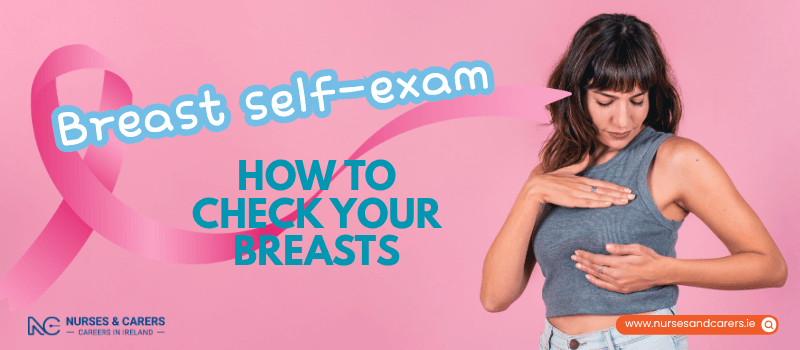
Examine your entire breast tissue area using your opposite hand (your right hand to examine your left breast, and your left hand for your right breast).
The Technique: Keep your fingers flat, pressed together, and use the soft pads of your three middle fingers. Move your fingers in small, overlapping circular motions.
The Coverage Boundary: Systematic tracking must cover the entire area from your collarbone down to the top of your stomach, and across from your armpit directly to your cleavage line.
Alternative Positions: You can perform this step while lying down flat on your back, which spreads the breast tissue evenly over the chest wall. Alternatively, doing this in the shower when your skin is wet and slippery can make it easier to detect deep underlying changes.
🚨 Recognizing Abnormal Changes
While performing your exam, look and feel for any of the following warning signs:
A distinct, hard lump, thick knot, or localized swelling in the breast or armpit area.
Dimpling, puckering, bulging, or redness of the breast skin.
A nipple that has turned inward (inversion) or changed shape.
Clear, pink, or bloody discharge coming from either nipple.
🚨 Urgent Advice: Request an urgent GP appointment immediately if you detect a new lump or notice any unexplained changes in your breasts. While the majority of breast lumps are benign and harmless, a prompt clinical examination is necessary to rule out serious conditions.
Disclaimer
The information provided here is for educational and informational purposes only. It does not constitute medical advice, diagnosis, or treatment. Always consult a qualified healthcare professional or your GP for specific medical concerns, diagnoses, or health advice. Never disregard professional medical advice or delay seeking it because of information you have read here.