
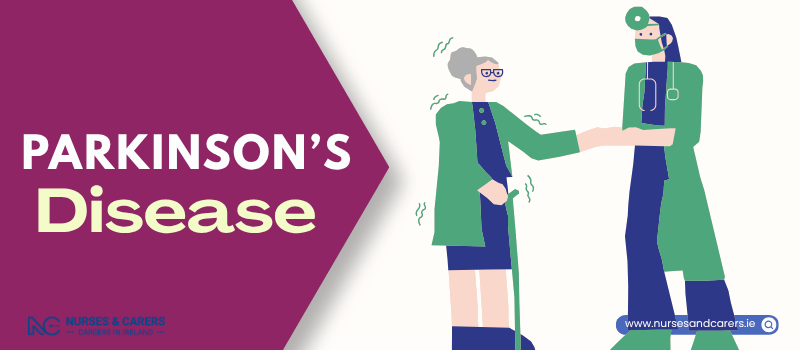
Parkinson’s Disease
8 Oct 2026 · 5 min read
On this page14 sections
Understanding Parkinson’s Disease: Symptoms, Pathology, and Treatment Options in Ireland
Parkinson’s disease is a progressive neurodegenerative disorder that primarily affects movement and worsens over time. It occurs when vital nerve cells (neurons) in a specific area of the brain called the substantia nigra weaken, become damaged, and die.
🔬 Causes and Pathology: What Happens in the Brain?
Dopamine Depletion: The affected neurons are responsible for producing dopamine, a chemical messenger that transmits signals to coordinate smooth, purposeful physical movements. By the time motor symptoms appear, a person has typically lost 60% to 80% or more of these dopamine-producing cells.
Norepinephrine Loss: Parkinson's also damages cells that produce norepinephrine, a messenger regulating automatic functions like heart rate and blood pressure. This explains non-motor fatigue and blood pressure fluctuations.
Lewy Bodies: Brain cells damaged by Parkinson's often contain Lewy bodies, which are abnormal microscopic clumps of a protein called alpha-synuclein.
Triggers: The exact cause remains unknown, but scientists believe it is triggered by a combination of genetic mutations and environmental factors (such as exposure to toxins).
📋 The Core Symptoms
Symptoms usually emerge slowly and vary dramatically between individuals. They are broadly split into motor and non-motor categories.
Motor (Movement) Symptoms
Tremors: Shaking at rest, often starting in a hand or fingers (known as a "pill-rolling" tremor).
Bradykinesia: Extreme slowness of movement, making simple daily tasks difficult.
Rigidity: Muscle stiffness and tension that can cause pain and restrict movement.
Postural Instability: Stooped posture, poor balance, and a higher risk of falling.
Secondary Changes: Monotone or slurred speech, masked facial expressions, and tiny, cramped handwriting (micrographia).
Non-Motor (Non-Movement) Symptoms
Cognitive Changes: Trouble thinking clearly, memory lapses, and in later stages, dementia.
Mood Disorders: Anxiety, apathy, and clinical depression.
Sleep Disturbances: Insomnia, vivid nightmares, and REM sleep behavior disorder (acting out dreams).
Autonomic Issues: Constipation, bladder urgency, oily/dry skin, and sudden blood pressure drops upon standing.
Sensory Loss: A diminished or lost sense of smell (anosmia)
🩺 Diagnosis
There is no definitive blood test or imaging scan that can diagnose Parkinson's disease. Diagnosis is clinical, meaning a neurologist makes the determination based on medical history, a thorough review of symptoms, and a physical/neurological exam.
💊 Treatment and Medical Management
While there is currently no cure, a variety of treatments can effectively manage symptoms and preserve independence:
Medications: The gold-standard treatment is Levodopa/Carbidopa, a combination drug that the brain converts directly into dopamine. Other drugs, such as dopamine agonists or anticholinergics, may also be prescribed.
Supportive Therapies: Physiotherapy helps improve gait and balance, occupational therapy assists with daily tasks, and speech therapy addresses swallowing and vocal volume issues.
Lifestyle Adjustments: Regular physical exercise and a balanced, high-fiber diet are crucial components of long-term symptom management.
In Ireland, treatment for Parkinson’s disease involves a mix of public medical services through the Health Service Executive (HSE) and private healthcare networks, coordinated alongside specialized community support.
1. Specialist Clinical Care & Neurology
Initial diagnosis and long-term care management are primarily handled by clinical teams consisting of Consultant Neurologists, Geriatricians, and Parkinson’s Disease Nurse Specialists (PDNS).
The Public Route (HSE): Referrals from a GP grant access to dedicated neurology and movement disorder clinics located in major public hospitals across the country. For instance, specialized services are anchored at hubs like The Dublin Neurological Institute (at the Mater Hospital) or the nurse-led Parkinson’s clinics at University Hospital Limerick.
The Private Route: Patients with private health insurance or those self-paying can access swift outpatient consultations via private networks like the Blackrock Clinic or dedicated individual consultants, such as Dr. Sean S. O'Sullivan in Cork.
2. Advanced and Surgical Therapies
When oral medications alone no longer adequately control motor fluctuations or tremors, several advanced device-aided therapies are accessible within the Irish healthcare infrastructure:
Deep Brain Stimulation (DBS): Ireland has a dedicated National DBS Service. Patient selection, pre-surgical processing, and programming take place at the Mater Misericordiae University Hospital in Dublin, while the neurosurgical implantation itself is performed at Beaumont Hospital.
Continuous Infusion Pumps: For advanced stages, continuous dopaminergic stimulation therapies are available, such as Levodopa-Carbidopa Intestinal Gel (LCIG) delivered directly into the small intestine via a portable pump, or continuous subcutaneous infusions.
3. Integrated Rehabilitation and Local Therapies
Managing Parkinson's long-term involves a strong focus on maintaining physical mobility, voice functionality, and everyday independence:
Physiotherapy and OT: Public community healthcare networks provide access to localized HSE chartered physiotherapists and occupational therapists via GP or public health nurse referrals. Alternatively, patients frequently utilize private clinics specializing in neurological rehabilitation—such as Sandycove Physiotherapy or the Physiotherapy Care Clinic in Dublin—to build custom programs tackling gait abnormalities or freezing issues.
Speech and Language Therapy: Essential for vocal tracking and managing swallowing issues. Many patients in Ireland engage with specialized vocal conditioning frameworks like the Parkinson Voice Project.
4. Community Support and Entitlements
Parkinson's Ireland: The national charity Parkinson's Ireland is a central pillar of support. They provide specialized patient-focused services, local in-person exercise classes (such as dance or boxing tailored for PD), and a Freephone Nurse Helpline (1800 359 359) for direct clinical advice.
Financial & Safety Schemes: Patients in Ireland are eligible to apply for schemes to alleviate financial burdens, including the Long-Term Illness Scheme (which provides free Parkinson's-related medications), VAT refunds on specialized mobility equipment (VAT 61A scheme), and HSE Housing Adaptation Grants to fit homes with contrast grab rails or level-access showers to reduce fall risks.
Disclaimer
The information provided here is for educational and informational purposes only. It does not constitute medical advice, diagnosis, or treatment. Always consult a qualified healthcare professional or your GP for specific medical concerns, diagnoses, or health advice. Never disregard professional medical advice or delay seeking it because of information you have read here.