
Swollen Ankles, Feet and Fingers in Pregnancy
18 Sept 2026 · 4 min read
On this page10 sections
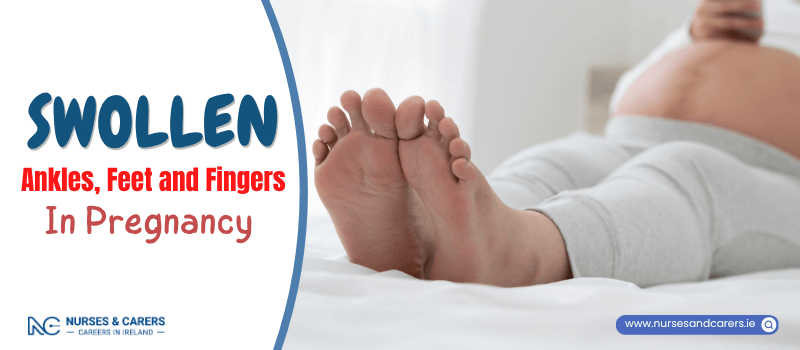
Mild swelling (oedema) in your ankles, feet, legs, and fingers is a very common part of pregnancy. While gradual swelling is typically harmless, a sudden onset of swelling or asymmetrical leg swelling can point to serious complications like pre-eclampsia or a deep vein thrombosis (DVT).
Here is the essential guide to understanding the physiological causes of pregnancy swelling, at-home reduction techniques, and critical warning signs.
Biological Causes of Gestational Swelling
Your body undergoes substantial vascular and fluid modifications during pregnancy to support fetal development:
Increased Fluid Retention: The body naturally holds significantly more water and fluid than its baseline state. This extra volume tends to collect in the lower limbs due to gravity.
Vascular Compression: As your uterus expands, its weight exerts mechanical pressure on the pelvic veins and the inferior vena cava. This partially restricts blood flow back up to your heart, causing fluid to leach into the surrounding tissues of your legs and feet.
Hand and Finger Involvement: This systemic fluid expansion can also settle in your upper extremities, making fingers swell and causing jewellery like rings to become tightly restricted.
Safe Ways to Reduce Swelling at Home
If your swelling has accumulated gradually and you are completely free of accompanying symptoms, you can improve your circulation using targeted at-home management strategies.
Relief for Legs, Ankles, and Feet
Avoid Prolonged Standing: Rest frequently and avoid staying on your feet for extended periods.
Elevate Your Limbs: Put your feet up on pillows whenever you are sitting or resting to assist venous return.
Do Not Cross Your Legs: Avoid crossing your legs at the knees or ankles, as this can further restrict local circulation.
Wear Appropriate Footwear: Switch to highly comfortable, supportive, and loose-fitting shoes.
Stay Hydrated: Drink plenty of water throughout the day. Staying hydrated prompts your kidneys to flush out excess fluids.
Maintain Activity: Stay as physically active as safely possible to naturally pump blood back up your legs.
Target Physical Foot Exercises
Perform these two exercises regularly to stimulate calf muscle pumps, reduce ankle swelling, and prevent painful leg cramps:
Flexion and Extension: Sit or lie down and deliberately bend your foot up toward your shin, then stretch it downward. Repeat this motion 30 times.
Ankle Rotations: Deeply rotate your foot in a circular motion 8 times clockwise, then repeat 8 times counter-clockwise.
Relief for Hands and Fingers
Apply Cold Compresses: Wet a clean flannel or facecloth with icy water and wrap it securely around your swollen fingers to reduce vascular engorgement.
Remove Restrictions: Remove rings and tight jewellery early in pregnancy before swelling escalates. Avoid wearing restrictive watches or bracelets.
Report Nerve Sensations: Disclose any localized pain, numbness, or tingling in your wrists or fingers to your midwife or doctor. This fluid buildup can compress the median nerve, leading to temporary carpal tunnel syndrome.
Evaluating Warning Signs and Seeking Medical Care
Urgent Obstetric Care Required
Sudden fluid accumulation can serve as a primary clinical marker for pre-eclampsia (pregnancy-induced high blood pressure). Contact your GP or maternity unit immediately if you experience:
Sudden, rapid swelling in your face, hands, eyelids, or feet.
A severe, persistent headache that does not respond to paracetamol.
Visual disturbances, such as blurred vision, blind spots, or flashing lights before your eyes.
Severe, sharp pain localized just below your right rib cage.
New or worsening vomiting after reaching 24 weeks of pregnancy.
Urgent Deep Vein Thrombosis (DVT) Care Required
Normal pregnancy swelling should affect both legs relatively equally. Asymmetrical swelling requires immediate vascular exclusion. Contact your doctor or maternity unit urgently if you present with:
Swelling restricted to only one leg.
One calf or leg that feels visibly red, uncomfortably hot to the touch, or tender when squeezed.
Emergency Services Required
Call emergency services (112 or 999) or go to the nearest emergency department immediately if you have asymmetrical leg swelling or tenderness paired with:
Sudden, sharp chest pain or upper back pain.
An abrupt onset of shortness of breath or difficulty breathing.
A persistent cough or coughing up streaks of blood.
These are critical indicators that a blood clot may have broken free and traveled to your lungs, causing a life-threatening pulmonary embolism.
Disclaimer
The information provided here is for educational and informational purposes only. It does not constitute medical advice, diagnosis, or treatment. Always consult a qualified healthcare professional or your GP for specific medical concerns, diagnoses, or health advice. Never disregard professional medical advice or delay seeking it because of information you have read here.