
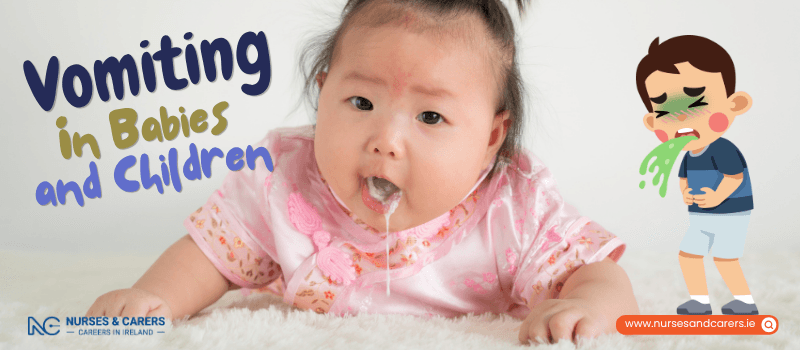
Vomiting in Babies and Children
18 Sept 2026 · 3 min read
On this page7 sections
Emergency Action Required
Call 999 for an ambulance or go to the nearest Emergency Department immediately if your child is vomiting and has:
A headache, a stiff neck, and a rash
Severe pain that gets worse quickly and spreads across their tummy
Any signs of severe dehydration (see list below)
When to Call Your GP Immediately
Contact your doctor straight away if your child has:
Vomited more than 3 times in the past 24 hours
Been vomiting for more than 3 days
A high temperature (38°C for babies under 3 months | 39°C for babies over 3 months)
Bloody, brown, or green-coloured vomit
Recently returned from travelling abroad and is vomiting more than usual
Signs of standard dehydration
Note: If you suspect your child has swallowed something poisonous, call the National Poisons Information Centreimmediately.
Home Care Guidelines
In most cases, you can safely look after your child at home.
Prioritise Fluids: Do not worry if your child refuses food. Focus entirely on clear fluids like water or broth. Avoid fruit juices and fizzy drinks until they feel better.
Medication: You can give liquid paracetamol if they have a fever or stomach pain.
Breastfed Babies: Continue normal feeds. Unwell babies may want to breastfeed more frequently. Additional fluids are generally not required.
Formula-Fed Babies: Continue normal formula feeds. Never dilute baby formula. Offer extra water or oral rehydration drinks in addition to their regular milk feeds.
Monitoring Dehydration
Vomiting can quickly lead to dehydration. Talk to your pharmacist about using an oral rehydration solution.
Go to the nearest hospital emergency department immediately if you notice signs of severe dehydration:
Fewer wet nappies than usual
Extreme drowsiness or being hard to wake up
Pale or blotchy skin
Cold hands and feet
Understanding the Causes
Vomiting is frequently caused by common infections like gastroenteritis (infectious diarrhoea) or gastro-oesophageal reflux. Less common but serious causes include:
Systemic infections (meningitis, pneumonia, or urinary tract infections)
Milk intolerances or food allergies
Intestinal blockages or conditions (pyloric stenosis, intussusception, appendicitis, or a strangulated hernia)
Preventing the Spread of Germs
Stomach infections spread incredibly easily. Protect your household by taking these actions:
Hand Hygiene: Thoroughly wash hands with warm water and soap before eating, before and after caring for someone unwell, after using the toilet/changing nappies, or handling rubbish and raw food.
Sanitisation: Clean hard surfaces with detergent and hot water. Wash soiled clothes and bedding at a high temperature. Discard or thoroughly wash any used cleaning cloths.
Separation: Ensure sick individuals never prepare food, and do not let your child share towels with anyone else.
The 48-Hour Exclusion Rule: Keep your child entirely at home. Do not send them back to crèche, pre-school, or school until at least 48 hours have passed since their very last episode of vomiting.
Disclaimer
The information provided here is for educational and informational purposes only. It does not constitute medical advice, diagnosis, or treatment. Always consult a qualified healthcare professional or your GP for specific medical concerns, diagnoses, or health advice. Never disregard professional medical advice or delay seeking it because of information you have read here.