
Acne
4 Sept 2026 · 7 min read
On this page11 sections
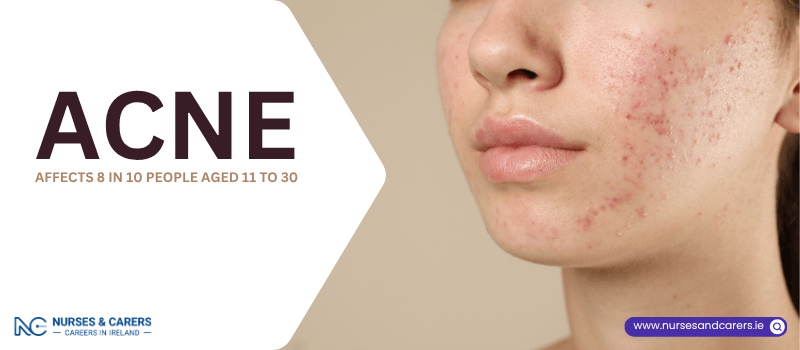
Acne is a widespread skin condition that causes spots and oily skin, sometimes making the affected areas feel hot or painful to the touch. It most commonly appears on the face, back, and chest.
While acne affects roughly 8 in 10 people aged 11 to 30, it is most prevalent in girls aged 14 to 17 and boys aged 16 to 19. Though most people see their symptoms clear up by their mid-20s, adult acne still impacts about 1 in 20 women and 1 in 100 men over the age of 25.
6 Types of Acne Spots
Acne spots vary significantly in appearance and severity depending on how a pore becomes blocked:
Blackheads: Small black or yellowish bumps. Their dark colour is caused by the lining of the blocked pore, not dirt.
Whiteheads: Similar to blackheads but firmer, with a closed surface that does not empty when squeezed.
Papules: Small, red, raised bumps that often feel tender or sore.
Pustules: Similar to papules but featuring a noticeable white tip in the middle caused by a build-up of pus.
Nodules: Large, hard, painful lumps that develop deep under the surface of the skin.
Cysts: Large, pus-filled lumps that resemble boils. These carry the highest risk of causing permanent scarring.
Acne Severity Levels
Medical professionals categorise acne into three distinct levels to determine the best approach for treatment:
Severity Level | Types of Spots Present | Risk of Scarring |
|---|---|---|
Mild | Mostly blackheads and whiteheads, with just a few papules and pustules. | Low |
Moderate | A widespread mix of many blackheads, whiteheads, papules, and pustules. | Moderate |
Severe | Widespread, painful papules and pustules, alongside nodules or cysts. | High (spots burst and damage the skin) |
Diagnosis and Next Steps
A general practitioner (GP) can easily diagnose acne simply by examining your skin and identifying the types of spots present.
For mild acne: You can visit your local pharmacist for over-the-counter creams or gels.
For moderate to severe acne: You should see a GP, as you will likely require prescription-strength topical treatments, oral antibiotics, or a referral to a dermatologist.
Treatments
The main medical treatments for acne focus on clearing blockages, reducing oil, and fighting bacteria. Because skin cells take time to renew, acne treatments can take up to 3 months to show results, meaning consistency and patience are essential.
Depending on the severity of your acne, a doctor or dermatologist may recommend one of the following approaches:
1. Topical Treatments (Creams, Gels, and Ointments)
These are applied directly to the skin and are usually the first line of defense.
Used for mild to moderate acne.
They work by unblocking pores, reducing inflammation, or killing skin bacteria.
They often contain active ingredients like benzoyl peroxide, retinoids, or topical antibiotics.
2. Combination Therapy (Antibiotic Tablets + Topicals)
When topical creams alone are not enough, doctors often combine them with oral medication.
Used for moderate to severe acne.
Oral antibiotics are prescribed alongside a topical treatment to tackle deep-seated infection and widespread inflammation from the inside out.
3. Hormonal Therapies
Since acne is frequently driven by hormonal fluctuations, managing these hormones can clear the skin.
Used specifically for women with acne, especially if flares track with menstrual cycles.
Treatment often involves the combined oral contraceptive pill or other hormone-balancing medications to lower the production of sebum (skin oil).
4. Isotretinoin
Isotretinoin is a powerful oral medication that targets all major causes of acne.
Used for severe acne that has failed to respond to other treatments, or acne that is actively causing permanent scarring.
Due to its strength and potential side effects, it can only be prescribed by a specialist dermatologist.
Treatments for acne scarring
Treatments for acne scarring are considered a form of cosmetic surgery or aesthetic procedures. Before pursuing any treatment, it is important to have realistic expectations; while these procedures can significantly improve the texture and appearance of your skin, they cannot completely erase scars.
Because true acne scars occur from changes in the deep layers of the skin, standard creams usually will not fix them. Instead, a dermatologist or cosmetic surgeon must match the specific treatment to the type of scar you have.
The First Step: Clear Active Acne First
You must completely control active acne before starting any scar treatments. Undergoing skin-resurfacing or surgical procedures while you still have active breakouts can spread bacteria, trigger new flare-ups, and ultimately lead to more scarring.
Common Treatments for Acne Scarring
1. Skin Resurfacing (For Shallow Scars & Uneven Texture)
· Laser Resurfacing: A specialist uses targeted lasers to remove the damaged outer layers of skin layer-by-layer, stimulating new collagen growth to smooth the surface.
· Dermabrasion: A rapid, rotating wire brush or medical tool manually removes the top layer of skin. As the skin heals, it appears smoother.
· Chemical Peels: High-strength acid solution is applied to the face, causing the top layer of skin to peel away so refreshed, less-scarred skin can grow back.
2. Collaging-Stimulating & Volumising (For Depressed/Pitted Scars)
· Microneedling (Skin Needling): A device studded with tiny needles creates controlled micro-injuries in the skin. This naturally triggers the body to produce collagen and elastin, filling in shallow pits.
· Dermal Fillers: Gel substances (like hyaluronic acid) are injected directly beneath indented scars to temporarily plump the skin and lift it level with the rest of your face.
3. Minor Surgical Techniques (For Deep, Severe Scars)
· Subcision: Used for "rolling" scars that look wavy. A doctor inserts a needle under the skin to cut the fibrous bands of scar tissue pulling the skin downward, allowing the skin to bounce back up.
· Punch Techniques: Used for deep "ice pick" or "boxcar" scars. The doctor surgically cuts out the tiny, individual scar and either stitches it closed or uses a small skin graft to plug the hole.
Causes of acne scarring
Acne scars form when deep-seated inflammation damages the surrounding tissue in the dermis (the skin’s second layer). When an acne lesion ruptures, the body treats it as a wound and initiates a biological healing sequence. The resulting scar is determined by how much collagen—the structural protein that keeps skin smooth—the body produces during this repair phase.
The structural changes happen in two different ways:
Too little collagen: If the body fails to produce enough collagen to replace the destroyed tissue, the skin heals with a deficit. This results in atrophic (indented) scars, such as ice-pick, boxcar, or rolling scars.
Too much collagen: If the body overproduces aberrant collagen fibers during the wound-healing process, it creates a net gain of tissue. This leads to hypertrophic or keloid (raised) scars, which are more common on the chest and back.
Core Causes and Aggravating Factors
Severe, Inflammatory Acne: The deeper and more inflamed the spots—such as painful nodules and cysts—the higher the risk that the follicle wall will burst and permanently destroy healthy dermal tissue.
Picking, Popping, and Squeezing: Forcing a pimple to pop drives bacteria, pus, and debris deeper into the delicate layers of your skin. This heavily increases localized inflammation and turns a minor spot into a permanent scar.
Delayed Treatment: Leaving severe or moderate acne to flare up for months or years without proper medical intervention prolongs the window of active inflammation, vastly increasing total tissue damage.
Genetics: Your inherited DNA influences your body’s natural inflammatory response and how effectively your skin cells remodel tissue. If close family members have acne scarring, your skin is statistically more prone to it.
Disclaimer
The information provided here is for educational and informational purposes only. It does not constitute medical advice, diagnosis, or treatment. Always consult a qualified healthcare professional or your GP for specific medical concerns, diagnoses, or health advice. Never disregard professional medical advice or delay seeking it because of information you have read here.