
Boils and Carbuncles
4 Sept 2026 · 4 min read
On this page9 sections
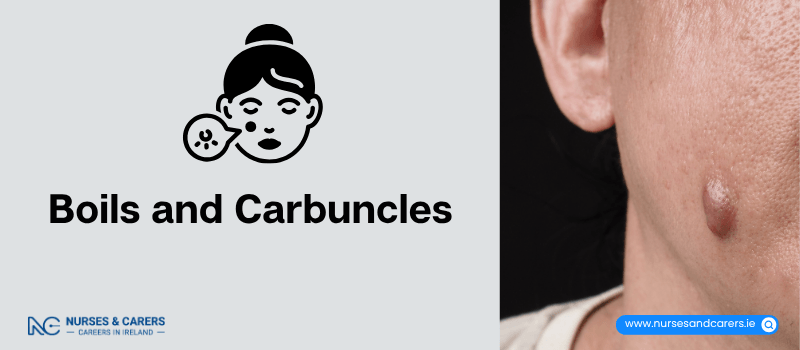
Boils and carbuncles are painful, pus-filled skin lumps typically triggered by a bacterial infection. While a boil is a single infected hair follicle, a carbuncle is a deeper, more severe cluster of boils that requires closer medical attention.
Symptoms & Appearance
Boils: Start as small, painful lumps. They appear red on white skin, or brown, purple, or grey on black or brown skin. Over time, they grow larger and fill with pus. They are common on the neck, face, and thighs.
Carbuncles: A cluster of interconnected boils that can grow up to 10cm and leak pus from multiple points. They frequently develop on the back, thighs, or the back of the neck.
Systemic Symptoms: Unlike simple boils, carbuncles often cause a high temperature (38°C or above), severe weakness, and exhaustion.
Risk Factors: Both are more common in men, middle-aged or older adults (for carbuncles), and individuals with weakened immune systems (e.g., from diabetes, HIV, or chemotherapy).
Causes & Transmission
The Culprit: Usually caused by Staphylococcus aureus (staph) bacteria, which normally live harmlessly on skin or inside the nose.
The Trigger: Infection occurs when these bacteria enter the skin through tiny cuts or grazes. Pus forms as the body sends white blood cells to fight the infection.
Spreading: The bacteria are highly contagious. They can easily spread to other parts of your body or to other people through skin contact or shared items.
Prevention & Care Dos and Don'ts
Action Category | Do | Don't |
|---|---|---|
Daily Hygiene | Wash skin with mild antibacterial soap. | Do not share towels, face cloths, or clothes. |
Wound Care | Clean and cover cuts with sterile bandages. | Do not leave used dressings lying around. |
Infection Control | Wash hands immediately after touching a boil. | Never squeeze, pop, or pierce a boil or carbuncle. |
Laundry | Wash bedding and underwear at high temperatures. | Do not wash infected items with regular family laundry. |
When to Contact a GP
Most single boils burst and heal naturally within a few weeks. However, seek non-urgent medical advice if you have:
Any carbuncle or a boil located on your face or spine.
A boil that feels soft, spongy, and continuously enlarges.
A boil that fails to heal after 2 weeks.
A boil accompanied by a fever.
A boil or carbuncle while living with diabetes or a weakened immune system.
Note: Your GP may take a skin swab or blood test if your infection keeps returning or fails to respond to standard treatments.
Most boils heal naturally within a few weeks, but you can manage symptoms at home and use medical interventions for severe or recurring cases.
At-Home Treatment
Do | Don't |
|---|---|
Apply a warm, moist face cloth for 10–20 minutes, 3–4 times daily. | Do not squeeze or pierce the boil, as this spreads the infection deeper. |
Cover a burst boil with sterile gauze or a dressing. | Do not touch the area without washing your hands immediately after. |
Use paracetamol or ibuprofen to relieve pain. | Do not leave a burst boil uncovered. |
Medical Treatments
If your boil persists past 2 weeks or you develop a carbuncle, a GP can provide the following treatments:
Draining: The GP (or hospital staff) numbs the area and uses a sterile needle or scalpel to safely lance and drain the pus.
Antibiotics: Prescribed if you have a carbuncle, a facial boil, a fever, severe pain, or a secondary skin infection like cellulitis.
Note: Always finish your entire antibiotic course to prevent the infection from returning.
Managing Recurring Infections
If you experience chronic boils, you may be a healthy carrier of Staphylococcus aureus (staph) bacteria. A GP can eradicate the bacteria using:
Antiseptic soap to clear bacteria living on the skin.
Prescribed antibiotic cream to eliminate bacteria living inside the nose.
Potential Complications
While rare, untreated or severe boils and carbuncles can lead to:
Cellulitis: A painful infection of the deeper skin layers.
Sepsis: A life-threatening, systemic body response to the infection.
Scarring: Permanent marks left behind by larger boils or carbuncles.
Disclaimer
The information provided here is for educational and informational purposes only. It does not constitute medical advice, diagnosis, or treatment. Always consult a qualified healthcare professional or your GP for specific medical concerns, diagnoses, or health advice. Never disregard professional medical advice or delay seeking it because of information you have read here.