
Bow Legs And Knock Knees In Children
4 Sept 2026 · 2 min read
On this page5 sections
Bow legs and knock knees are highly common, normal stages of a child's skeletal development that almost always correct themselves naturally without any treatment.
Understanding the Difference
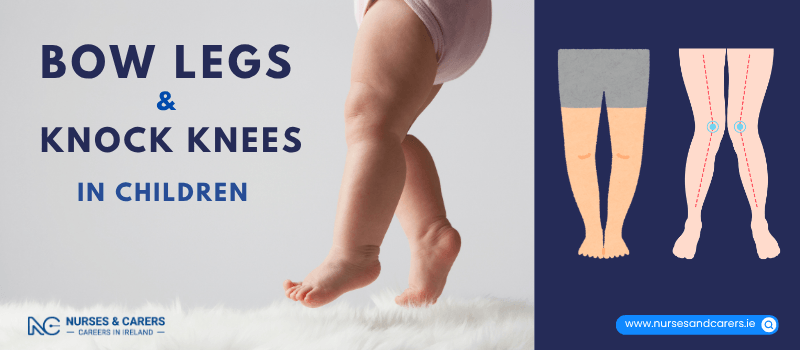
Bow Legs: When your child stands with their feet and ankles touching, their knees curve outward and remain wide apart.
Knock Knees: When your child stands with their knees touching, their feet and ankles remain wide apart. While a tiny separation is normal, the gap in children with knock knees can be 3 inches (approx. 7.5 cm) or more.
Typical Developmental Timeline
Infancy to Toddlerhood (Bow Legs): Most babies are naturally born with bow legs. This shape becomes most noticeable when they first begin to stand and walk. It typically straightens out on its own by age 2 or 3.
Early Childhood (Knock Knees): Knock knees are standard in healthy children between the ages of 3 and 5. The legs gradually align as the child grows, though some adults retain a very mild knock-knee stance.
What NOT to Do
Trying to force alignment can cause harm to growing joints.
Do not use specialized corrective shoes, leg braces, specific exercises, or night splints.
Do not force your child to wear their shoes on opposite feet.
When to Seek Medical Advice
Schedule a GP Visit If Your Child: |
|---|
• Experiences pain, an unprompted limp, or obvious difficulty walking. |
• Continues to have bow legs after reaching age 3. |
• Has knock knees that continue to worsen after age 8. |
• Is visibly short or small in height for their age. |
• Is only affected in one leg rather than both symmetrically. |
Tip for Parents: If you are concerned, take a clear photograph of your child's legs standing up with their knees facing forward every 6 months. This provides your GP with a helpful visual timeline of their growth.
Disclaimer
The information provided here is for educational and informational purposes only. It does not constitute medical advice, diagnosis, or treatment. Always consult a qualified healthcare professional or your GP for specific medical concerns, diagnoses, or health advice. Never disregard professional medical advice or delay seeking it because of information you have read here.