
Breast Screening – BreastCheck
4 Sept 2026 · 26 min read
On this page70 sections
BreastCheck is Ireland’s national breast screening programme. It offers free mammograms (breast X-rays) to detect breast cancer at an early stage—often when it is too small to see or feel. Routine screening is exclusively for individuals who feel healthy and have no symptoms. Catching cancer early makes it easier to treat and dramatically improves the likelihood of a full recovery.
Eligibility Criteria
To qualify for free breast screening, you must be living in Ireland, hold a Personal Public Service (PPS) number, and meet one of the following criteria:
Women: Aged 50 to 69.
Transgender, Non-Binary, or Intersex Individuals: Eligible if you were registered female at birth and have female breast tissue, OR if you were registered male at birth and have been taking feminising hormones for more than 5 years.
Invitation Timeline & The Register
Screening invitations are issued dynamically based on the national database. You can join, check, or update your details on the register from age 48:
First Invitation: BreastCheck aims to send your first appointment letter by age 52 (or age 53 in some instances).
Routine Frequency: You will be invited back for a routine screen every 2 to 3 years until you reach the age of 69.
What the Screening Process Involves
The Appointment: Your mammogram takes place at a dedicated BreastCheck clinic or a local mobile screening unit.
The Results: A results letter is sent to both you and your GP within 3 weeks of your appointment.
The Outcome: The vast majority of screening results are entirely normal, showing no signs of cancer.
Critical Limitations & Safety Warning
Interval Cancers: Mammograms do not find all breast cancers. Malignancies can still develop or become noticeable in the 2-to-3-year interval between your official screening appointments.
Age-Related Risk: Your statistical risk of developing breast cancer continues to rise as you get older.
Urgent Advice: Breast screening is only for people without symptoms. If you detect a lump, structural change, or are worried about your breast health, contact your GP immediately. Do not wait for your next BreastCheck invitation, even if you recently had a completely normal mammogram.
Multilingual Resources & Guides
BreastCheck provides translated toolkits, informational videos, and step-by-step guides. You can download the primary 16-page information booklet (PDF) or access clinical introductory videos translated into 25 different languages directly from the HSE website, including:
English: Important information about your breast screening
Irish: Faisnéis thábhachtach faoi do scagadh cíche
Ukrainian: Важлива інформація про скринінг раку молочної залози
Russian: Важная информация о скрининге рака молочной железы
Your Appointment
Knowing what to expect at your BreastCheck appointment helps make the process smooth and stress-free. The entire screening visit lasts about 30 minutes, and the actual mammogram takes only a few minutes.
The Invitation and Scheduling Process
The Letters: If your details are up to date on the register, you will first receive a letter inviting you to join the program. You do not need to reply to this. A separate appointment letter detailing your time and location will arrive shortly after, usually within a month.
The HSE Health App: If you use and log in to the official HSE Health App, your appointment details will also automatically appear there.
Rescheduling: If you cannot attend, call the breast screening unit using the number on your appointment letter as soon as possible so your slot can be given to someone else.
Important Actions Before Your Appointment
You must contact BreastCheck before your visit if any of the following apply to you:
Breast Implants: You can absolutely still have a mammogram, but the radiographer needs to know in advance to use a specialized technique.
Pregnancy or Breastfeeding: You may be advised to safely delay your screening appointment.
Recent Mammogram: If you have had a breast X-ray recently outside of the program, your timeline may need adjustment.
Additional Needs: Contact them early if you require disability supports, or if you are transgender, non-binary, or intersex and need specialized appointment assistance.
What Happens During Your Appointment
1. Arrival and Preparation
Consent: If it is your first screening, you will be asked to sign a formal consent form.
Privacy: You will be given complete privacy to undress. You must be naked from the waist up for the X-ray, so it is highly recommended to wear a two-piece outfit (a top with a skirt or trousers) rather than a dress.
2. The Mammogram Procedure
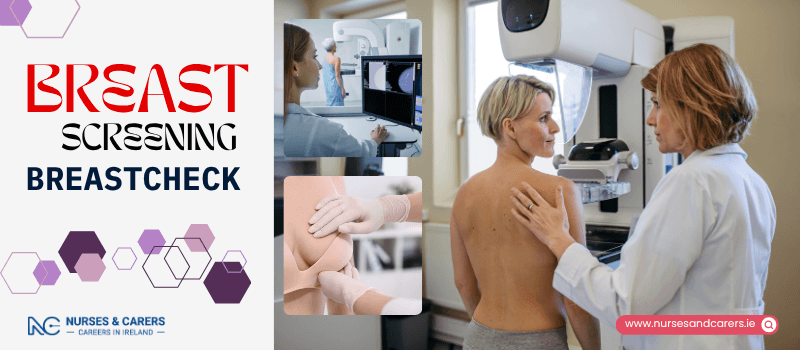
The Setup: A professional radiographer will position your breast onto the X-ray machine plate.
Compression: A clear plastic paddle will gently lower onto your breast to flatten and spread the tissue. While this compression can feel uncomfortable or painful for a few seconds, it is essential for capturing a clear, high-quality image.
The X-Rays: The radiographer will take 2 images of each breast from different angles.
Radiation Safety: The procedure uses an extremely small, safe dose of radiation that poses no significant risk to your health.
After Your Appointment
Once finished, you are free to leave immediately. Shortly after your visit, you may receive an automated text message inviting you to provide feedback via the BreastCheck Patient Experience Survey. Your official results letter will follow within 3 weeks.
Breast screening access for women with additional needs
BreastCheck provides a range of dedicated accommodations to ensure the screening process is fully accessible, comfortable, and stress-free for individuals with additional needs. If required, you are also fully welcome to bring a support person, friend, or family member into the appointment with you.
How to Arrange Accessibility Supports
To request any of the accommodations listed below, you can contact the team as soon as you receive your invitation by:
Calling the phone number provided directly on your appointment letter.
Emailing the dedicated access team at access@breastcheck.ie.
Tip: When you get in touch, you can request a longer time slot to ensure you do not feel rushed during your appointment.
Physical and Sensory Accommodations
Wheelchair & Mobility Access
Static Screening Units: Feature fully accessible parking located close to the main entrance.
Mobile Screening Units: Set up in community locations with an effort to secure nearby accessible parking. Every mobile unit is equipped with a mechanical lift to provide full wheelchair access.
Action: If you are assigned to a mobile unit, call the number on your letter in advance to confirm the specific parking layout for that temporary site.
Hearing Aids
Loop Systems: All screening units are fitted with functional induction loop systems to assist individuals who wear compatible hearing aids.
Communication & Learning Supports
Interpreters and Accessible Formats
If you have specific communication preferences, BreastCheck can arrange:
Sign Language Interpreters (Irish Sign Language / ISL).
Spoken Language Interpreters if you prefer to communicate in a language other than English.
Braille versions of all essential screening documentation.
Learning Disability Resources
To help make the step-by-step process easier to understand, the service provides specialized educational tools, including:
Easy-Read Leaflets that use simplified language and visual aids.
Informational Videos equipped with clear subtitles.
Next Steps for Your Peace of Mind
Review the Register: Ensure your baseline details are correct so your invitation arrives safely. You can check or update your status online via the HSE BreastCheck Register.
Contact Early: As soon as your letter arrives, email or call the team immediately to ensure your interpreters, longer time slots, or specific physical supports are locked into the schedule.
List of BreastCheck units in ireland
Ireland's national breast screening infrastructure operates via 4 main regional static centres. These main regional hubs manage and coordinate 24 mobile BreastCheck units that move dynamically between 54 community locations across the country.
Main Static Regional BreastCheck Units
BreastCheck Eccles Unit, 36 Eccles Street, Dublin 7: Serving North Dublin, County Dublin, and the North-East/Midlands regions (including Cavan, Monaghan, Meath, Louth, Carlow, and Kilkenny). Located at 36 Eccles Street, Dublin 7, right next to the Mater Misericordiae University Hospital campus.
Contact: 01 882 6200 or eccles@breastcheck.ie
BreastCheck Merrion Unit, Merrion Road, Dublin 4: Serving South Dublin, County Dublin, Kildare, Laois, and Wexford. Located on the grounds of St. Vincent's University Hospital, Merrion Road, Dublin 4.
Contact: 1800 45 45 55
BreastCheck Western Unit, Newcastle Road, Galway: Serving counties Galway, Mayo, Roscommon, Donegal, Sligo, Leitrim, and Clare. Located on the grounds of University Hospital Galway, Newcastle Road, Galway.
Contact: 1800 45 45 55
BreastCheck Southern Unit, Infirmary Road, Cork: Serving Cork, Kerry, Limerick, Waterford, and South Tipperary. Located at the corner of Infirmary Road and Hibernian Road, next to the South Infirmary Victoria University Hospital in Cork City. (An additional sub-unit operates on the grounds of St Mary's Orthopaedic Hospital in Gurranabraher).
Contact: 1800 45 45 55
Mobile Screening Unit Locations
Rather than traveling to a regional hospital hub, most individuals receive appointments at temporary mobile X-ray units deployed locally. You can review active schedules or verify addresses via the HSE Find a BreastCheck Unit Tool.
Frequent mobile deployment hubs include:
East / North-East: Drogheda, Blanchardstown, Clondalkin, Arklow.
South / South-East: Carlow, Dungarvan, Ennis.
West / North-West: Castlebar, Donegal.
Your Results
After you complete your BreastCheck mammogram, your images are independently reviewed by two consultant radiologists (breast X-ray specialists) to ensure maximum accuracy. They analyze the X-rays for localized abnormalities, including physical lumps, structural differences between the left and right breast (asymmetries), or clusters of tiny calcium deposits (microcalcifications).
Because benign (non-cancerous) and malignant (cancerous) tissue can look identical on an X-ray, a mammogram alone cannot definitively diagnose cancer.
Receiving Your Screening Results
Timeline: A formal results letter is mailed directly to both you and your GP within 3 weeks of your appointment.
The Outcomes: There are only two possible outcomes from a routine screening mammogram: a normal result or an invitation for further clinical assessment.
Outcome 1: A Normal Result
The vast majority of screening mammograms show no signs of abnormalities or cell changes.
Next Screening: You will automatically be placed back on the registry to receive your next free screening invitation in 2 years.
Interim Care: A normal result is not a permanent guarantee. Cancers can still develop in the interval between appointments. You must remain "breast aware," check your breasts regularly, and visit a GP immediately if you detect any symptoms, rather than waiting for your next BreastCheck invitation.
Outcome 2: Further Assessment Needed
Statistically, about 1 in 25 individuals are recalled for more comprehensive testing. Being recalled does not mean you have cancer—the vast majority of people who undergo further testing are given a completely normal, clear result.
What Happens at a Recall Clinic?
If you are called back, you will attend a specialized assessment clinic for targeted diagnostic tests, which are often completed during the same day:
A specialized physical breast examination by a consultant.
Focused ultrasound scans or additional localized mammogram views.
A tissue biopsy, where a fine needle extracts a small cell sample to be checked under a microscope.
Timeline for Assessment Results
Imaging Results: If your ultrasound and examination are normal, you will be discharged back to the routine screening pool. You will be scheduled for your next routine screen within 2 to 3 years, depending on mobile unit schedules in your area.
Biopsy Results: If a tissue sample is taken, your breast care nurse or consultant surgeon will schedule a follow-up appointment with you usually 1 week later to discuss the laboratory findings.
If Cancer is Confirmed
If the laboratory analysis confirms a breast cancer diagnosis, you will meet directly with your multi-disciplinary care team, including your consultant surgeon and dedicated breast care nurse.
In line with the HSE Open Disclosure Policy, your team will provide completely transparent, open, and honest communication regarding your diagnosis. They will discuss a personalized treatment plan tailored to your cancer's stage, which may include surgery, radiotherapy, chemotherapy, hormone therapy, or targeted immunotherapy.
Breast Screening And Your Personal Information
The HSE’s National Screening Service acts as the official data controller for your personal information. To systematically invite eligible individuals, BreastCheck automatically builds its database using baseline records provided directly by the Department of Social Protection.
Your records are kept strictly confidential and secure in full compliance with General Data Protection Regulations (GDPR).
The Information BreastCheck Collects
To safely coordinate, track, and deliver your screening, the service securely stores:
Identity Details: Your name, address, phone number, date of birth, PPS number, surname at birth, and mother's maiden name.
Clinical Screening History: Your specific mammogram results, breast clinic attendance records, biopsy outcomes, and subsequent treatment details.
How and With Whom Your Data is Shared
Your personal information is used directly to manage your care cycle—including sending automated reminders for upcoming screens, delivering results, and coordinating follow-up care. To ensure seamless clinical continuity, your records are shared with:
Your designated GP.
The National Cancer Registry Ireland (for public health monitoring).
The processing laboratory if you require a tissue biopsy.
The hospital clinic or multidisciplinary team handling your active treatment, if required.
Secondary Uses & Quality Control
Your data may be reviewed internally to monitor quality standards or optimize the national screening program. BreastCheck may also contact you to participate in patient experience surveys. However, your data will never be used for medical research unless the service secures your explicit, fully informed consent in strict accordance with the Health Research Regulations.
Your Data Rights & Choices
1. Accessing Your Records
Under GDPR, you retain the legal right to request a complete copy of your personal data and historic breast screening records at any time. If you have questions regarding your data privacy, you can contact the central HSE Data Protection Officer:
Phone: 01 635 0359
Email: dpo@hse.ie
2. Managing Your Status on the Register
Because data is pulled automatically from social welfare records, it is vital to ensure your contact details remain accurate. You can verify your status, check your details, or register a new address online in about 5 minutes via the HSE BreastCheck Register.
3. Opting Out
Taking part in national breast screening is entirely voluntary. If you do not wish to participate, you can officially opt out of the programme by calling Freephone 1800 45 45 55. If you change your mind in the future, you can call the exact same number to be re-entered onto the active register.
Benefits And Limitations Of Breast Screening
Deciding to participate in routine breast screening involves weighing its substantial health benefits against its recognized clinical limitations. While BreastCheck significantly reduces the number of women dying from breast cancer, understanding the full picture helps you make an informed choice and manage any associated anxiety.
The Primary Benefits of Screening
Early Detection: Mammograms reveal tiny abnormalities long before they can be seen or physically felt by you or your GP.
Higher Survival Rates: Catching a tumor at an early stage makes it far easier to treat and radically improves your chances of a full recovery.
Peace of Mind: For the vast majority of participants, a normal result provides reassurance regarding their current breast health.
The Limitations and Risks
No screening program is perfect. BreastCheck does not prevent cancer from developing, and it is less effective if advanced cancer is already present.
1. Screening Inaccuracies (False Metrics)
False Positives (3 in 100 women): An abnormality is flagged on the X-ray, causing you to be called back for further tests (such as a biopsy), only to discover no cancer is present. This can cause significant, unnecessary worry and anxiety.
False Negatives (2 in 1,000 women): The mammogram gives a normal result even though a cancer is actually present but went undetected.
2. Over-Diagnosis and Over-Treatment
Screening detects all abnormal changes, including very early, slow-growing, or harmless lesions. Because modern medicine cannot always predict which early cancers will become life-threatening and which will remain harmless, some women undergo surgery, radiation, or chemotherapy for a cancer that may never have caused them problems.
3. Interval Cancers
An interval cancer is a malignancy diagnosed in the 2-to-3-year gap between regular screening appointments. It is an inevitable part of mass population screening and happens in one of three ways:
Newly Developed (Common): A fast-growing tumor that emerged entirely after your last clear mammogram.
Subtle Signs (Less Common): The cancer was visible on the last X-ray, but the signs were so minor they were reasonably interpreted as normal.
Missed Signs (Rare): Distinct signs of cancer were present on the previous image but were overlooked.
4. Minimal Radiation Risk
Mammograms expose your breasts to a very small, highly regulated dose of radiation. While any X-ray carries a microscopic risk of triggering cell changes decades later, the health benefit of catching breast cancer early far outweighs this very low risk.
Statistical Summary (Per 1,000 Women Screened)
Screening Outcome | Statistical Breakdown | Next Clinical Step |
|---|---|---|
Normal Result | 960 out of 1,000 women | Return to the screening pool in 2 years. |
Recall for More Tests | 40 out of 1,000 women (1 in 25) | Undergo ultrasound, physical exam, or biopsy. |
Confirmed Cancer Diagnosis | 7 out of 1,000 women | Meet with a surgeon to plan targeted treatment. |
False Negative (Missed Cancer) | 2 out of 1,000 women | Requires ongoing personal symptom monitoring. |
Critical Takeaway: Do Not Rely on Screening Alone
Because of false negatives and interval cancers, a clear BreastCheck result is never a permanent guarantee that you are free of cancer.
Urgent Advice: You must continue to check your breasts regularly. If you notice a lump, nipple discharge, skin dimpling, or any unusual changes at any time, visit your GP immediately. Do not wait for your next scheduled BreastCheck appointment.
Interval Cancer - A Breast Cancer Diagnosis Between Screening Mammograms
An interval cancer is a breast cancer that is diagnosed in the 2-to-3-year gap between your routine BreastCheck screening appointments. These cancers are an unavoidable reality of mass population screening worldwide. Statistically, for every 1,000 individuals in Ireland who receive a clear, normal BreastCheck result, 2 will develop an interval cancerbefore their next scheduled mammogram.
Why Interval Cancers Occur
An interval cancer generally falls into one of two clinical categories:
New Development (Most Common): A rapidly growing tumor that emerged entirely after your last normal mammogram.
Undetected Tissue (Rare): The cancer cells were already present during your last screening but were not found, often because the early signs were extremely subtle.
Urgent Advice: A normal BreastCheck result is not a permanent guarantee. If you notice a lump, skin dimpling, or any other changes, contact your GP immediately. Do not wait for your next routine screening invitation, regardless of how recently you had a clear mammogram.
Requesting an Official Mammogram Review
If you are diagnosed with breast cancer within 2 years of a normal BreastCheck mammogram, you have the legal and clinical right to request a formal, independent review of your previous screening images to understand how the cancer developed.
1. How to Apply
You can submit your request to the National Screening Service via email or post:
Post: National Screening Service, King’s Inns House, 200 Parnell St, Freepost FDN7612, Dublin 1, D01 A3Y8.
2. The Verification and Timeline
Eligibility & ID: BreastCheck will contact you to verify your identity and confirm your eligibility.
Medical Records: You will be asked to sign a consent form allowing the service to access your hospital medical records.
Dedicated Contact: You will be assigned a personal, direct point of contact to support you and answer questions throughout the process.
Duration: The service aims to complete your full clinical review within 3 to 6 months.
3. How the Review is Conducted
To ensure complete objectivity, two independent consultant radiologists who were not involved in your original screening will re-examine your BreastCheck mammogram. They will evaluate whether the original assessment was satisfactory or if indicators were missed. Once finished, a copy of the final review report will be sent directly to you.
How To Access Your Breast Screening Records
Under Article 15 of the General Data Protection Regulation (GDPR), you have the legal right to request a complete or specific copy of your breast screening records at any time. The HSE National Screening Service treats all data requests with strict confidentiality and is committed to communicating with you in an open, honest, and transparent manner.
Who Can Access These Records?
A formal request can be submitted by:
The Account Holder: Any individual who has used the BreastCheck screening service.
Next of Kin: An authorized representative of someone who has passed away.
Legal Representatives: A solicitor acting on behalf of a patient or their next of kin.
What Your Records Include
You can request your complete historic profile or narrow it down to specific documents. The file contains:
Mammogram test results and clinical notes.
Attendance histories at local static or mobile breast clinics.
Detailed treatment logs and diagnostic outcomes, if applicable.
How to Submit an Official Records Request
To secure your records, you must submit a written request via email or post.
1. Information You Must Include:
To safely verify your identity and protect your privacy, your application must contain:
Your full name and current address.
Your date of birth and phone number.
A clear scan or photocopy of a valid Photo ID (Passport, Driver’s Licence, or Public Services Card).
A clear statement specifying whether you want all of your records or only specific dates/documents.
2. Where to Send Your Application:
By Email: Send your digital request and scanned ID to info@breastcheck.ie.
By Post: Mail your written request and photocopied ID to:
National Screening Service, King's Inns House, 200 Parnell Street, Dublin 1, D01 A3Y8.
Processing Timeline
BreastCheck will acknowledge your request upon receipt. Once they have successfully verified your identity and confirmed all necessary details, they are legally obligated to compile and send your records within 30 days.
Requesting Your Images for an Independent Review
If you specifically want your previous BreastCheck mammogram images released so that new, independent radiologistscan review them, this is processed through a separate internal department.
You can submit an explicit request for an imaging review via the following channels:
By Email: Send your request to clientservices@screeningservice.ie.
By Post: Address your letter to:
Client Services, National Screening Service, King's Inns House, Parnell Street, Dublin 1, D01 A3Y8.
Contact BreastCheck
You can contact the BreastCheck Central Office directly for general enquiries, register updates, or appointment scheduling, or reach out to your local static regional clinic.
National Central Office Contacts
Freephone (Within Ireland): 1800 45 45 55 (Monday to Friday, 9am to 5pm)
International Phone: 00 353 21 421 7612
Email: info@breastcheck.ie
Postal Address: BreastCheck Central Office, King's Inns House, 200 Parnell Street, Dublin 1, D01 A3Y8.
Regional Static Screening Units & Travel Access
1. BreastCheck Eccles Unit (Dublin & North-East Region)
Coordinates care for counties including Cavan, Monaghan, Louth, Meath, and North Dublin.
Address: 36 Eccles Street, Dublin 7, D07 Y7C6 (Next to the Mater Hospital campus, off North Circular Road)
Contact: 01 882 6200 | eccles@breastcheck.ie
Parking: Disc parking is available directly on Eccles Street.
Bus Routes: Dublin Bus 4, 4a, 10, 10a, 38, 38a-c, 120, 121, 122. Via Dorset St: 3, 11, 13, 16. Via Phibsboro: 19, 19a, 83.
2. BreastCheck Merrion Unit (South Dublin & Mid-Leinster)
Address: Merrion Road, Dublin 4, D04 VP26 (Beside the main front entrance to St. Vincent’s University Hospital)
Contact: 01 223 5800 | merrion@breastcheck.ie
Parking: Paid parking is available at the St. Vincent’s multi-storey car park or the church car park opposite.
Transit: A 10-minute walk from Sydney Parade DART Station. Dublin Bus routes: 4, 4a, 5, 7, 7a, 45.
3. BreastCheck Western Unit (Connacht & North-West)
Address: Newcastle Road, Galway, H91 YR4R (At the back entrance of the University College Hospital grounds, off Browne Roundabout)
Contact: 091 580 600 | western@breastcheck.ie
Parking: Limited spaces directly outside the unit entrance; a public car park is located at the front of UCHG.
Transit: Bus route 4 from Eyre Square stops at the main entrance of University College Hospital.
4. BreastCheck Southern Unit (Munster)
Address: Infirmary Road, Ballintemple, Cork, T12 ET99 (Corner of Infirmary Road and Hibernian Road, next to the South Infirmary Victoria University Hospital)
Contact: 021 464 9700 | southern@breastcheck.ie
Parking: Disc parking on Anglesea St, Anglesea Place, Infirmary Road, and Old Blackrock Road. Closest multi-storey sites are City Hall and Merchants Quay.
Transit: Under a 10-minute walk from Cork City Centre, 12 minutes from the Parnell St Bus Station, and 20 minutes from Kent Train Station. Bus routes: 3, 4, 6, 7, 7A, 10 (nearest stop on Anglesea St).
Submitting Complaints and Feedback
If you would like to share your screening experience or log a formal complaint, you can contact the National Screening Service feedback department:
Phone lines: 01 865 9378 | 01 865 9398 | 087 764 0121 | 087 774 6964
Email: your.say@screeningservice.ie
Post: Susie Black (Complaints and Feedback Manager), Client Services, National Screening Service, King's Inns House, 200 Parnell Street, Dublin 1, D01 A3Y8.
Disclaimer
The information provided here is for educational and informational purposes only. It does not constitute medical advice, diagnosis, or treatment. Always consult a qualified healthcare professional or your GP for specific medical concerns, diagnoses, or health advice. Never disregard professional medical advice or delay seeking it because of information you have read here.