
Dupuytren's Contracture
9 Sept 2026 · 2 min read
On this page9 sections
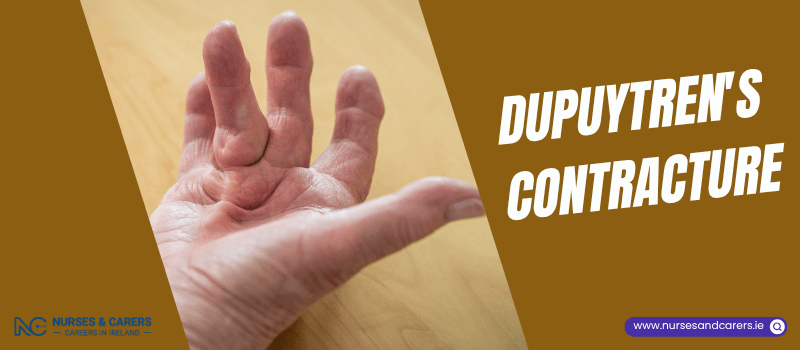
Dupuytren's contracture is a progressive condition that causes tissue beneath the skin of your palm to thicken and lose flexibility, eventually drawing your fingers backward into a bent position toward your palm.
Key Symptoms
Target areas: Mainly affects the ring and little fingers.
Early signs: Lumps, dimples, or firm ridges developing on the palm.
Progression: Fingers gradually bend inward over months or years and may become stuck.
When to See a GP
Consult a doctor if your fingers are bent and you experience either of the following:
Positive tabletop test: You cannot lay your hand completely flat on a table.
Functional impact: You struggle with daily, routine tasks.
Linked Risk Factors
While the exact cause is unknown, it is strongly linked to:
Family history of the condition.
Smoking habits.
High alcohol consumption.
Diabetes or epilepsy.
Medical Treatment Options
Treatment is usually required when you fail the tabletop test. Your GP can refer you to a specialist surgeon to discuss three primary options:
1. Fasciectomy (Standard Surgery)
Procedure: A surgical cut is made along the palm and finger to release the tight tissue.
Anaesthetic: General (asleep) or local (numbed hand).
Stay: Day case (leave same day).
Recovery: 4 to 12 weeks.
Risks: Stiffness, infection, numbness, or healing delays. Note: 90% of patients experience zero complications.
2. Needle Fasciotomy (Non-Surgical Release)
Procedure: A needle is inserted into multiple points across the palm to section and loosen the tight bands.
Anaesthetic: Local only.
Stay: Day case.
Recovery: Up to 2 weeks.
Risks: Pain, numbness, or skin tears. Note: The condition is more likely to return compared to open surgery.
3. Dermafasciectomy (Surgery + Skin Graft)
Procedure: The affected tissue and overlying skin are removed, followed by a skin graft taken from another part of your body (usually done 4 days after straightening).
Anaesthetic: General or local.
Stay: Dependent on the two-stage procedure timeline.
Risks: Bleeding, infection, numbness, and longer recovery times. Note: This offers the lowest rate of recurrence.
Post-Treatment Recovery
Your fingers may not become perfectly straight, strong, or as flexible as before. Expect the following during recovery:
Splints: A temporary cast initially, followed by a night splint for 3 to 6 months.
Symptoms: Pain, stiffness, swelling, and bruising lasting a few weeks.
Rehabilitation: Hand exercises for up to 6 months, supervised by a hand physiotherapist.
Activity: Resume light daily tasks as soon as possible (within days), but expect a few weeks before returning to heavy activities.
Warning: Dupuytren's contracture can return over time, regardless of the treatment chosen.
Disclaimer
The information provided here is for educational and informational purposes only. It does not constitute medical advice, diagnosis, or treatment. Always consult a qualified healthcare professional or your GP for specific medical concerns, diagnoses, or health advice. Never disregard professional medical advice or delay seeking it because of information you have read here.