
Erythema Multiforme
10 Sept 2026 · 5 min read
On this page16 sections
Erythema multiforme is an acute, self-limiting hypersensitivity reaction affecting the skin and mucous membranes. It is characteristically triggered by an underlying infection or an adverse reaction to specific medications. While the condition predominantly affects adults under the age of 40, it can manifest at any age.
Erythema multiforme occurs in two primary clinical forms:
Erythema Multiforme Minor: A mild, localized cutaneous reaction that generally resolves spontaneously within a few weeks without permanent complications.
Erythema Multiforme Major: A rare, severe, and potentially life-threatening variant that involves widespread skin involvement and extensively targets the mucous membranes of the mouth, genitals, and eyes.
Symptoms and Progression
1. Cutaneous Rash (Target Lesions)
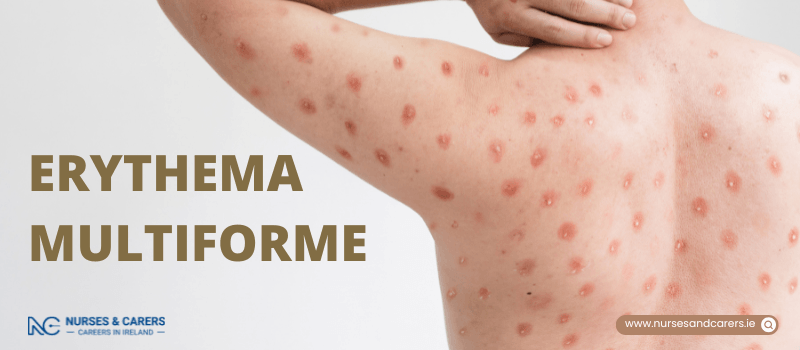
The rash appears suddenly, developing over a period of a few days. It typically initiates on the hands or feet before spreading symmetrically to the limbs, trunk, and face. The lesions exhibit specific visual characteristics:
Initial Presentation: Small, round, slightly elevated red spots that can expand into patches measuring a few centimeters in size.
Dermatological Variations: On lighter skin tones, the lesions appear as distinct pink rings. On black or brown skin, the patches frequently present as purple or darker than the surrounding skin.
The "Target" or "Bullseye" Appearance: Pathognomonic lesions display a dark red or crusted center (sometimes containing a central blister), surrounded by a pale pink middle ring and a darker outermost border.
Resolution: The lesions may be mildly pruritic (itchy) or uncomfortable and typically fade over 2 to 4 weeks. In severe presentations, these patches can coalesce into large, confluent, painful, and raw areas of denuded skin.
2. Mucosal and Systemic Symptoms
Systemic involvement is significantly more common in erythema multiforme major and closely related conditions like Stevens-Johnson Syndrome (SJS). Additional clinical features include:
Constitutional Symptoms: High fever, severe headache, arthralgia (aching joints), and general malaise.
Oral Involvement: Extremely painful, raw sores and ulcerations inside the oral cavity, accompanied by severely swollen, crusted lips, which heavily restrict eating and drinking.
Genitourinary Involvement: Ulcerations on the genitals that cause severe pain during urination (dysuria).
Ocular Involvement: Bilateral red, inflamed, and painful eyes, accompanied by marked photophobia (light sensitivity) and blurred vision.
Etiology and Triggers
Erythema multiforme is a non-contagious immunological reaction. While the definitive trigger can sometimes remain idiopathic (unclear), most documented cases stem from infections or drug exposures.
Infectious Triggers (Most Common)
Viral: The vast majority of cases are driven by the Herpes Simplex Virus (HSV), typically the cold sore virus. The virus remains latent in the body and can reactivate periodically; many patients develop a classic cold sore a few days before the cutaneous rash emerges.
Bacterial: Infection with Mycoplasma pneumoniae, a type of bacteria frequently responsible for atypical chest and respiratory infections, is another well-documented trigger.
Medication Triggers
Certain pharmacological agents can occasionally precipitate the condition, particularly the severe major form. Primary triggers include:
Antibiotics: Sulfonamides, tetracyclines, amoxicillin, and ampicillin.
Non-Steroidal Anti-Inflammatory Drugs (NSAIDs): Medications such as ibuprofen.
Anticonvulsants: Anti-seizure medications, including phenytoin and barbiturates.
Diagnostic Framework and Consultations
Outpatient Assessment
Consult your GP promptly if you suspect you or your child has developed erythema multiforme. A physician can frequently formulate a clinical diagnosis purely through a visual assessment of the characteristic target lesions. If the presentation is atypical, you may be referred to a specialist dermatologist for a confirmatory skin biopsy.
Emergency Evaluation
If a medical professional suspects erythema multiforme major or Stevens-Johnson Syndrome, an immediate emergency transfer to a hospital is mandatory. These conditions represent severe medical emergencies that require acute stabilizing care.
Clinical Management and Treatment Strategy
The objectives of treatment are to address the root cause, alleviate systemic discomfort, accelerate skin healing, and prevent secondary bacterial infections.
Outpatient Management (Mild Cases)
Trigger Cessation: Identifying and immediately discontinuing any suspected triggering medication. Note: Patients must never halt a prescribed medication without explicit direct guidance from their physician.
Symptomatic Relief: Utilizing oral antihistamines and topical emollients (moisturizers) to minimize pruritus, and topical corticosteroid creams to lower localized inflammation and erythema.
Analgesia: Administering standard painkillers to manage systemic or localized discomfort.
Targeted Therapies: Prescribing oral antiviral tablets (e.g., acyclovir) if the underlying driver is identified as an HSV reactivation, and using anesthetic or antiseptic mouthwashes to ease the pain of oral ulcerations.
Inpatient Management (Severe Cases)
Patients with erythema multiforme major require intensive hospital monitoring, which may include:
Advanced systemic pain management and intravenous fluid resuscitation to counter dehydration.
Specialized non-adherent wound dressings to protect raw skin areas from secondary bacterial infection.
A heavily modified, soft, or purely liquid diet (or nutritional support via a feeding tube) if oral mucositis prevents normal swallowing.
Systemic corticosteroid tablets to suppress widespread inflammation.
Intravenous antibiotics if a secondary bacterial skin infection (such as cellulitis) develops.
Specialized ophthalmic evaluations, accompanied by medicated lubricating eye drops or steroid ointments to prevent permanent ocular damage.
Prognosis and Complications
The vast majority of individuals experiencing erythema multiforme minor achieve a complete, uncomplicated recovery within 2 to 4 weeks, with the skin healing entirely without permanent scarring.
Recurrence Risk
There is a distinct risk of the condition recurring, particularly when triggered by periodic reactivations of the Herpes Simplex Virus. For patients who experience frequent, debilitating recurrences, specialists often prescribe a continuous, long-term suppressive course of daily oral antiviral medication.
Severe Complications
In severe or poorly managed cases of erythema multiforme major, potential long-term complications include:
Systemic Sepsis: A life-threatening bacterial bloodstream infection.
Cellulitis: Severe, deep bacterial infections of the skin tissue layers.
Permanent Tissue Damage: Residual cutaneous scarring, hypopigmentation, or hyperpigmentation.
Ocular Impairment: Permanent eye damage, corneal scarring, or vision loss.
Internal Organ Inflammation: Secondary inflammatory damage targeting the lungs (pneumonitis) or liver (hepatitis).
Disclaimer
The information provided here is for educational and informational purposes only. It does not constitute medical advice, diagnosis, or treatment. Always consult a qualified healthcare professional or your GP for specific medical concerns, diagnoses, or health advice. Never disregard professional medical advice or delay seeking it because of information you have read here.