
Ganglion Cyst
11 Sept 2026 · 4 min read
On this page8 sections
Overview and Symptoms
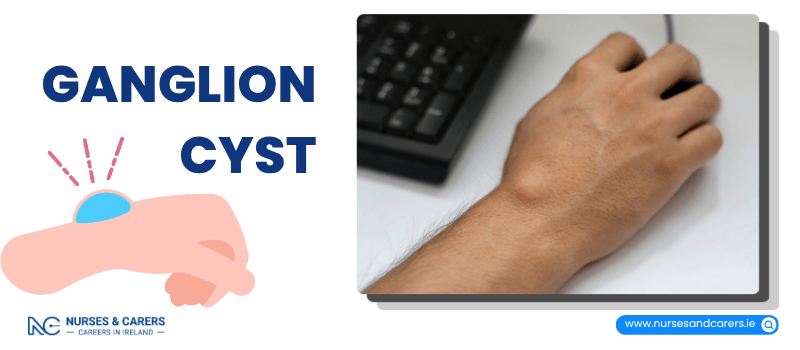
A ganglion cyst is a benign, fluid-filled swelling that most commonly develops near joints or tendons, particularly in the hand and wrist. These cysts can vary in size, ranging from as small as a pea to as large as a golf ball, and present as a smooth, localized lump beneath the skin.
Composition: The cyst contains synovial fluid—a thick, clear liquid that naturally cushions and lubricates joints and tendons during movement.
Etiology: The exact cause remains uncertain. They typically form when synovial fluid leaks from a joint capsule or tendon sheath and accumulates within a distinct sac. A history of localized joint injury or underlying osteoarthritis can increase the likelihood of development.
Prognosis: Ganglion cysts are completely harmless and are rarely painful. Many resolve spontaneously without medical intervention, though this regression can take several years.
Diagnosis
A General Practitioner (GP) can typically diagnose a ganglion cyst through a straightforward physical examination. If the diagnosis is unclear or if the doctor wants to rule out other types of tissue masses, they may refer you for diagnostic imaging scans, such as an ultrasound or an MRI.
Treatment Options
Medical intervention is entirely optional and is generally reserved for cysts that cause persistent pain, numbness, or restriction in joint mobility. The two primary clinical interventions are fluid aspiration and surgical excision.
1. Aspiration (Non-Surgical Drainage)
Aspiration is a minimally invasive, painless outpatient procedure performed in a clinic or hospital setting.
The Process: The clinician uses a sterile needle and syringe to drain as much synovial fluid from the cyst as possible. In some instances, a corticosteroid medication is injected into the emptied sac to help suppress recurrence, though clinical evidence regarding its long-term efficacy is mixed.
Recovery: A small dressing or adhesive plaster is applied over the injection site, which can typically be removed after 6 hours. You can return home immediately following the procedure.
Recurrence Risk: Approximately 50% (1 in 2) of ganglion cysts return after aspiration. If the cyst recurs and causes symptoms, surgery is usually recommended.
2. Surgical Removal (Excision)
Surgical removal is a minor procedure performed under either local or general anesthesia, depending on the cyst's location and surgical complexity.
Open Surgery: The surgeon makes a localized incision directly over the affected joint or tendon to excise the cyst and its root stalk.
Keyhole Surgery (Arthroscopy): In some cases, an arthroscopic approach is utilized. A tiny camera and specialized miniature instruments are inserted into the joint to locate and remove the cyst from within.
Post-Operative Recovery and Care
Following surgery, your incision will be closed and protected with a sterile bandage to prevent infection and buffer the area from accidental impact. While post-operative pain is typically mild, standard over-the-counter painkillers can manage initial discomfort.
Hand and Wrist Cysts: If your surgery was on your upper extremity, you may be advised to wear a supportive sling for the first few days to elevate the limb, reduce swelling, and prevent accidental bumps. Regularly moving your fingers is strongly encouraged to maintain joint flexibility.
Activity and Work: Recovery timelines depend heavily on the nature of your daily activities. Desk-based workers often return to work within a few days, whereas individuals performing manual labor may require several weeks. You may resume driving as soon as you can confidently and safely control the vehicle.
Potential Complications and Risks
Surgical complications are rare and generally mild. However, patients should be aware of the following potential post-operative outcomes:
Scarring and Sensation Changes: Surgery leaves a permanent scar, which can occasionally become thick or raised. Mild, localized numbness in the skin surrounding the scar can sometimes persist.
Temporary Bruising and Stiffness: Transient swelling and bruising are normal and resolve quickly. Persistent stiffness or severe pain may indicate a minor localized infection requiring antibiotics, or prolonged stiffness that may benefit from physical therapy.
Permanent Discomfort: Permanent joint stiffness or chronic pain can occur, though this is highly unusual.
Recurrence: No treatment guarantees permanent removal. A ganglion cyst can still return post-surgery, a risk that increases if the cyst is located on the palm-facing (volar) side of the wrist.
Disclaimer
The information provided here is for educational and informational purposes only. It does not constitute medical advice, diagnosis, or treatment. Always consult a qualified healthcare professional or your GP for specific medical concerns, diagnoses, or health advice. Never disregard professional medical advice or delay seeking it because of information you have read here.