
Meningococcal ACWY (MenACWY) Vaccine
14 Sept 2026 · 3 min read
On this page14 sections
Overview, Eligibility, and Safety
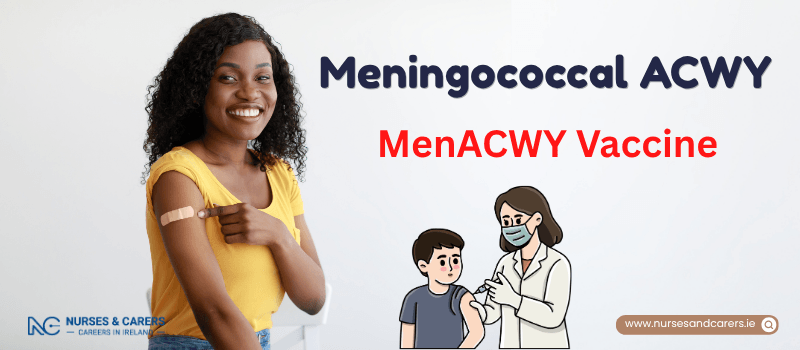
The MenACWY vaccine provides robust protection against four distinct strains (A, C, W, and Y) of meningococcal bacteria. These bacteria are primary triggers for meningitis (a life-threatening infection of the membranes surrounding the brain and spinal cord) and septicaemia (blood poisoning, a severe infection of the bloodstream).
Note: While highly effective against these four strains, the MenACWY vaccine does not protect against all causes of meningitis.
Vaccine Eligibility and Distribution
Public School Vaccination Programme (Ireland)
The vaccine is recommended and provided free of charge to all children in their first year of secondary school.
Specialized Education: Eligible students attending special education schools or who are home-schooled are fully included in the public offering.
Missed Doses: If a student is absent on the designated school vaccination day, parents should contact the school vaccination team at their local immunisation office to schedule a catch-up appointment.
Adult Administration
Adults wishing to receive the MenACWY vaccine for travel, personal risk reduction, or medical indications can obtain it by consulting their General Practitioner (GP). Adult administration is outside the public school program and requires private payment.
Contraindications and Ingredients
Medical exclusions for the MenACWY vaccine are rare. An individual should not receive this vaccine if they have a history of severe allergic reaction (anaphylaxis) to:
A previous dose of the MenACWY vaccine.
Any specific ingredient or component contained within the vaccine.
Vaccine Formulations in Ireland
The primary vaccine brands utilized under the national program are Nimenrix and MenQuadfi. Complete breakdowns of active ingredients, stabilizing components, and detailed clinical profiles can be cross-referenced by checking the digital Patient Information Leaflet (PIL) for the specific brand administered.
Clinical Administration and Co-Administration
Method: The vaccine is administered via an intramuscular injection, typically into the deltoid muscle of the upper arm.
Dosage: First-year secondary school students require only a single dose to achieve optimal immunity.
Co-administration: Under the current national school schedule, the MenACWY vaccine is safely administered during the same clinical visit as the HPV vaccine and the Tdap booster (Tetanus, low-dose Diphtheria, and acellular Pertussis).
Expected Side Effects and Management
Like all medical interventions, the MenACWY vaccine can cause mild, temporary side effects that typically resolve spontaneously within 24 to 48 hours.
Common Localized and Systemic Reactions
Pain, redness, swelling, induration (hardness), or itching at the injection site.
Low-grade fever or mild nausea.
Headaches, generalized fatigue, and a temporary loss of appetite.
A mild, self-limiting skin rash.
Home Management
If a child experiences localized discomfort or a post-vaccine fever, over-the-counter paracetamol or ibuprofen can be administered. Always follow the precise pediatric dosage instructions provided on the product packaging or consultation leaflet.
Disclaimer: This information is for general knowledge and should not be taken as medical advice. Consult with a healthcare provider regarding any questions or concerns about vaccinations.
Safety, Monitoring, and Emergency Support
The MenACWY vaccine maintains an exemplary international safety record and is standard in national immunization portfolios globally. Safety and adverse reactions are continuously monitored by the Health Products Regulatory Authority (HPRA) in Ireland and the European Medicines Agency (EMA).
Anaphylaxis Protocol
Severe systemic allergic reactions (anaphylaxis) are exceptionally rare. All school immunisation teams and clinical vaccinators are fully trained and equipped with epinephrine (adrenaline) to manage and reverse acute allergic events immediately on-site.
🧑⚕️ POST-VACCINATION SUPPORT
If you develop acute concerns regarding your child's recovery following vaccination, contact:
• The school vaccination team at your local immunisation office
• Your primary care GP or local GP Out-of-Hours Service
• The clinical triage desk at your nearest hospital Emergency Department (ED)
Disclaimer
The information provided here is for educational and informational purposes only. It does not constitute medical advice, diagnosis, or treatment. Always consult a qualified healthcare professional or your GP for specific medical concerns, diagnoses, or health advice. Never disregard professional medical advice or delay seeking it because of information you have read here.