
Moles
14 Sept 2026 · 4 min read
On this page11 sections
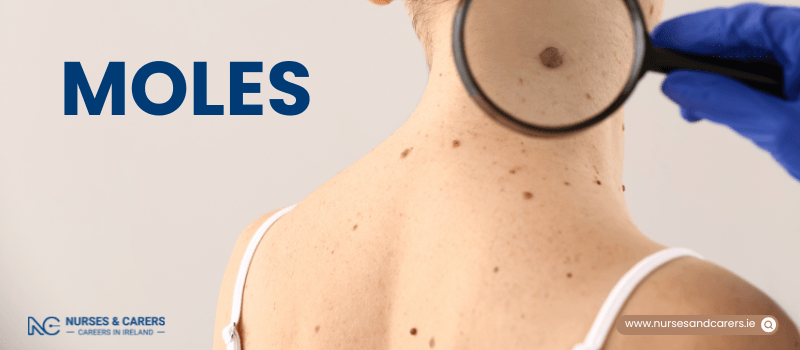
Moles are common, colored spots on the skin. They develop when pigment-producing cells, called melanocytes, grow in clusters. Moles can be raised or flat, vary in size, and present differently depending on skin tone, typically appearing darker on brown and black skin.
Most moles are entirely harmless (benign). It is completely normal for:
Infants to be born with moles.
New moles to appear up to your 30s, particularly during childhood and adolescence.
Moles to darken slightly during pregnancy.
Moles to naturally fade or disappear as you get older.
Hairs to grow out of a mole.
Moles and Skin Cancer
While most moles are safe, some can develop into melanoma, a serious form of skin cancer. Roughly half of all melanomas develop from an existing mole that changes, while the other half appear as a brand-new spot on the skin. Regular skin checks are vital to catch changes early.
The ABCDE Checklist for Mole Screening
You can evaluate your moles by looking for the ABCDE warning signs:
A – Asymmetry: One half of the mole does not match the other half.
B – Border: The edges are irregular, ragged, notched, or blurred.
C – Colour: The color is not uniform. It may include varying shades of brown or black, or patches of pink, red, white, or blue.
D – Diameter: The spot is larger than 6 millimetres across (about the size of a pencil eraser), although melanomas can sometimes be smaller.
E – Evolving: The mole is actively changing in size, shape, or color over weeks or months.
ℹ️ Non-Urgent GP Advice
Schedule an appointment with a GP if you notice a mole that:
Changes its shape or develops an uneven border.
Changes color, darkens, or displays multiple distinct shades.
Grows larger or becomes increasingly raised from the skin surface.
Starts itching, crusting, flaking, or bleeding.
Looks entirely different from all the other moles on your body ("the ugly duckling" sign).
Clinical Treatment and Removal
Melanoma Treatment
If your GP suspects a mole might be cancerous, they will issue an urgent referral to a hospital dermatologist. The primary medical treatment for melanoma is surgical excision to entirely remove the malignant mole and surrounding tissue.
Cosmetic Removal
Because harmless moles pose no health risk, public health services do not routinely treat them. Removing a benign mole does not reduce your statistical risk of developing melanoma elsewhere in the future. If you dislike the appearance of a harmless mole, you can opt to pay for removal at a private clinic. Your GP can provide advice on reputable private options.
Sun Protection: Safeguarding Your Skin
Ultraviolet (UV) radiation from the sun and tanning beds damages the DNA in your skin cells, which is the primary cause of melanoma. A tan is not a sign of health; it is a physiological reaction indicating that UV light has already damaged your skin.
UV rays can penetrate cloud cover and cause cellular damage even when the weather is cool or overcast. Protect your skin by adopting these safety habits:
What to Do
Seek shade: Stay out of direct sunlight between 11:00 am and 3:00 pm, when UV rays are at their peak intensity.
Cover up: Wear tightly woven clothing, a wide-brimmed hat, and UV-blocking sunglasses.
Apply sunscreen correctly: Use a high-factor sunscreen (SPF 30 or higher) that features broad-spectrum UVA protection (look for a circular UVA logo or a 4- to 5-star rating). Apply it thoroughly 20 minutes before stepping outdoors.
Reapply frequently: Put more sunscreen on every 2 hours, and immediately after swimming, toweling off, or sweating.
What to Avoid
Do not allow your skin to get sunburnt.
Do not actively sunbathe to achieve a tan.
Do not use sunlamps, tanning booths, or sunbeds.
Reminder: Sunscreen does not offer 100% protection against UV radiation. It should always be used as a secondary defense alongside protective clothing and shade.
Disclaimer
The information provided here is for educational and informational purposes only. It does not constitute medical advice, diagnosis, or treatment. Always consult a qualified healthcare professional or your GP for specific medical concerns, diagnoses, or health advice. Never disregard professional medical advice or delay seeking it because of information you have read here.