
Newborn Hearing Screening
17 Sept 2026 · 5 min read
On this page19 sections
The newborn hearing screening test checks infants for permanent hearing loss in one or both ears. Offered to almost all babies in Ireland, it ensures families receive early support and advice.
Screening Timeline and Process
Timing: The test is typically performed in the hospital before the baby reaches 1 month of age.
Home Births: Public Health Nurses (PHNs) will arrange an outpatient appointment at a local screening clinic.
Age Limit: The screening test can be performed up to 3 months of age if previously missed.
Next Steps: If the initial screening does not show a clear response in both ears, the baby is referred to an audiologist for diagnostic testing.
Why Early Screening Matters
Prevalence: While rare, 1 to 2 babies out of every 1,000 in Ireland are diagnosed with hearing loss.
Early Intervention: Finding issues early allows for immediate treatment, such as hearing aids or speech and language therapy.
Developmental Benefits: Prompt treatment directly supports a baby's speech, language, social, and emotional development.
Exceptions to Standard Screening
Babies may bypass standard screening and receive a direct referral for a diagnostic hearing test if they:
Have an improperly formed outer ear.
Have a severe infection, such as bacterial meningitis.
Are unwell after spending over 6 months in a special care baby unit.
Are receiving end-of-life care (where screening decisions are made closely with the parents).
Key Steps for Parents
If the Test Was Missed
Contact your Public Health Nurse (PHN) immediately to arrange an appointment before your baby turns 3 months old.
If You Face Ongoing Concerns
Newborn screening does not catch every case of hearing loss.
Speak to your PHN or GP at any stage if you notice changes or worry about your child’s hearing.
Available Educational Leaflets
Your Baby's Hearing Screening Test
Your Baby's Hearing Screening Test (NICU/Special Care Guide)
Your Baby's Visit to the Audiology Hearing Clinic
Childhood Hearing Checklist
Newborn Hearing Screening Test
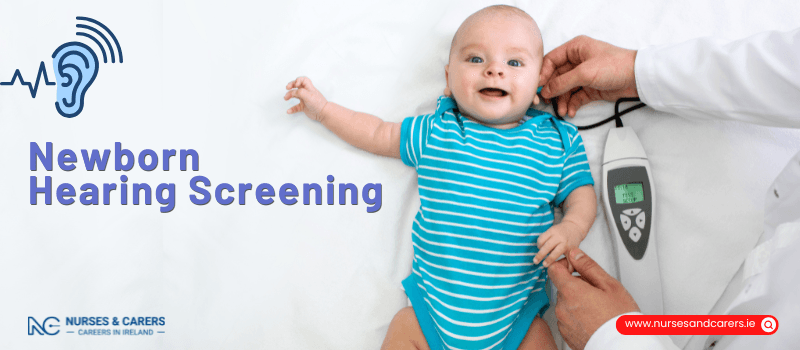
The newborn hearing screening test is a quick, painless procedure performed by trained specialists called "screeners." It takes just a few minutes, does not cause any discomfort, and allows you to stay with your baby throughout the process.
Testing Conditions
State: The test must be done while your baby is settled or asleep.
Mechanism: The test checks if your baby's inner ear (the cochlea) produces an echo when it receives sound.
Step-by-Step Screening Process
Placement: The screener places a small, soft-tipped earpiece into your baby's outer ear.
Sound Playback: The equipment plays gentle clicking sounds into the ear.
Measurement: The screening machine automatically detects and measures the echo returned by the inner ear.
Results: You will receive the final screening results immediately at the time of the test.
Understanding Inconclusive (Not Clear) Results
If the first test does not show a clear response, it does not automatically mean your baby has hearing loss.
Common Reasons for a Second Test
The baby was unsettled or moving during the screening.
High background noise in the testing room.
Fluid or temporary debris remains inside the ear canal from birth.
Next Steps for Inconclusive Tests
The screener will perform a second screening test.
This second test will take place either before hospital discharge or at a designated outpatient clinic appointment.
Special Care Unit Considerations
Elevated Risk: Babies who spend more than 48 hours in a neonatal intensive care or special care unit have a higher statistical likelihood of hearing loss.
Testing Routine: Screening is still generally performed before leaving the hospital.
Follow-up: If hospital screening is missed due to medical care, the team will contact you directly with an outpatient appointment.
Baby’s Hearing Screening Results
You will receive your baby’s hearing screening results immediately after the procedure. Most infants receive a normal result, but clear protocols are in place if further investigation is needed.
Scenario 1: A Passing (Normal) Result
A pass means your baby is highly unlikely to have permanent hearing loss at this time. However, the initial screening cannot rule out all issues.
Tracking Growth: The screener will provide a Childhood Hearing Checklist to monitor your child's responses as they grow.
Delayed Onset: Some forms of hearing loss develop later in childhood.
Action Step: If you develop concerns about your child's speech, language, or hearing at any stage, contact your Public Health Nurse (PHN) or GP immediately.
Scenario 2: An Inconclusive (Not Normal) Result
An abnormal or inconclusive result does not automatically confirm that your baby has a permanent hearing impairment.
Audiology Referral: Your baby will be referred to specialized audiology services for definitive diagnostic testing.
Timeline: This diagnostic assessment appointment is typically scheduled and offered within 4 weeks.
Scenario 3: Passing but At-Risk for Delayed Hearing Loss
Some babies pass their initial newborn screening but carry a higher statistical risk of developing hearing loss later in infancy or childhood.
Follow-up Testing: At-risk infants are proactively offered a follow-up diagnostic assessment when they are approximately 9 months old.
High-Risk Indicators:
Genetic Syndromes: Down, Waardenburg, Treacher-Collins, Goldenhar, Alport, or Usher syndromes.
Structural Variances: A cleft lip, cleft palate, or an improperly formed outer ear.
Congenital Infections: Infections contracted in the womb or during delivery, such as Cytomegalovirus (CMV).
Disclaimer
The information provided here is for educational and informational purposes only. It does not constitute medical advice, diagnosis, or treatment. Always consult a qualified healthcare professional or your GP for specific medical concerns, diagnoses, or health advice. Never disregard professional medical advice or delay seeking it because of information you have read here.