
Psoriasis
17 Sept 2026 · 15 min read
On this page40 sections
Symptoms and Classifications
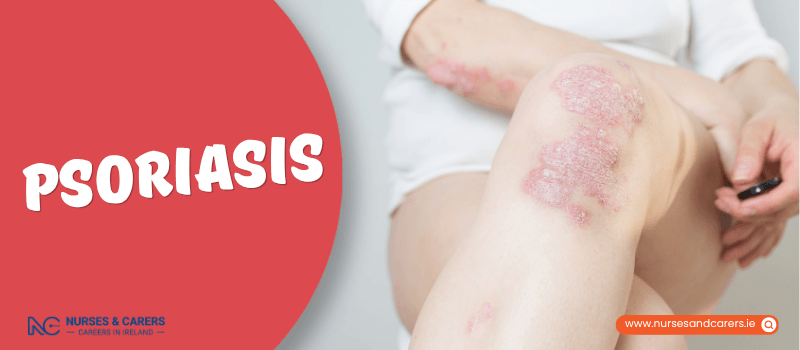
Psoriasis is a chronic, systemic, immune-mediated inflammatory skin condition characterized by the rapid overproduction of skin cells. This cellular acceleration leads to the formation of distinct, dry, and flaky (scaly) plaques. While lesions can manifest on any anatomical site, they most frequently cluster on the scalp, elbows, knees, and lower back.
The severity of psoriasis varies naturally, ranging from mild, localized patches to severe, widespread body coverage. The disease typically follows a cyclical course, marked by periods of remission where symptoms clear, followed by acute flare-ups.
Symptom Presentation by Skin Tone
The visual appearance of psoriasis plaques shifts significantly depending on an individual's natural skin pigmentation:
On Lighter Skin Tones: The underlying plaques present as distinct pink or bright red patches of skin, topped with thick, white, or shimmering silvery scales.
On Darker Skin Tones (Brown or Black): The plaques frequently present as purple, dark brown, or deep pink patches. The overlying scales typically look grey, white, or silvery, and the lesions may be easier to identify by touch than by sight.
Sensory Feedback: Regardless of skin tone, the affected areas are frequently intensely itchy, tender, or physically sore.
Classification by Anatomical and Clinical Subtypes
1. Plaque Psoriasis (Psoriasis Vulgaris)
Plaque psoriasis is the most prevalent form of the condition, accounting for more than 80% of all clinical diagnoses.
Characteristics: It causes raised, inflamed, and dry lesions (plaques) covered in a dense layer of silvery scales.
Complications: The plaques are highly prone to itching and aching. In severe or poorly managed cases, the skin overlying highly mobile joint areas (such as knuckles or elbows) can become excessively rigid, leading to deep, painful fissures that crack and bleed.
2. Scalp Psoriasis
A specific manifestation of plaque psoriasis that can affect isolated sections of the hairline or cover the entire scalp.
Characteristics: The skin breaks out in thick, tightly adherent scales that flake off excessively, closely resembling severe dandruff. It causes chronic itching and localized irritation.
Complications: In severe instances, the thick buildup of scales combined with intense scratching can cause temporary hair loss (alopecia). Hair follicle function routinely returns to normal once the underlying inflammation is suppressed.
3. Guttate Psoriasis
Characteristics: Characterized by the sudden eruption of numerous small, distinct, drop-shaped papules across the chest, abdomen, arms, legs, and scalp.
Demographics and Triggers: This variant is most common in children, teenagers, and young adults. It is uniquely linked to a recent bacterial streptococcal throat infection (strep throat), manifesting 1 to 2 weeks post-infection. While it can resolve completely on its own within a few weeks, it can also act as the precursor to chronic plaque psoriasis.
4. Inverse (Flexural) Psoriasis
Characteristics: Affects the high-friction, sensitive folds and creases of the body, including the armpits, groin, intergluteal cleft (bottom), and the inframammary folds beneath the breasts.
Presentation: Unlike other forms, it produces large, smooth, bright red patches that are completely devoid of scaling due to the naturally moist environment of skin folds.
Aggravating Factors: Localized friction and sweating rapidly worsen inverse psoriasis, causing severe discomfort and raw chafing during hot weather or physical exertion.
5. Nail Psoriasis
Psoriasis alters the nail matrix in up to 50% of individuals living with the condition, affecting both fingernails and toenails. Symptoms include:
The development of tiny dents, depressions, or pinprick indentations across the nail surface (pitting).
Noticeable discolouration (often looking like a yellow-brown "oil drop" under the nail) or distortion of the natural nail shape.
Onycholysis: The nail plate loosens, detaches, and completely separates from the underlying pink nail bed.
In severe stages, the structural integrity of the nail degrades entirely, causing it to crumble.
Critical Medical Emergencies: Life-Threatening Psoriasis
While most types of psoriasis are managed safely through outpatient dermatology clinics, certain rare, acute variants present as life-threatening systemic emergencies. These conditions cause a catastrophic breakdown of the skin barrier, leaving the body vulnerable to hypothermia, dehydration, and overwhelming sepsis.
Type 1: Generalised Pustular Psoriasis (von Zumbusch Psoriasis)
Presentation: Characterized by the sudden, widespread eruption of thousands of painful, white, pus-filled blisters (pustules) over a wide area of intensely red, inflamed, and painful skin. The pustules can merge to form large lakes of pus.
Type 2: Erythrodermic Psoriasis
Presentation: An aggressive, inflammatory form that causes a fiery, intense redness and peeling scales to sheet across virtually the entire surface of the body (exceeding 90% of the total skin area). It causes severe burning, unmanageable itching, and a total loss of body temperature regulation.
⚠️ EMERGENCY TRIAGE PROTOCOL:
If you experience a sudden onset of intense, burning skin pain accompanied by the rapid spread of pus-filled blisters across your body, or if your skin turns red and begins peeling off extensively, treat it as a medical emergency.
Contact your GP or out-of-hours service immediately for an urgent referral, or proceed directly to the nearest hospital Emergency Department (ED). These rare states require immediate hospital admission and high-intensity dermatological stabilization.
Co-morbidities: Psoriatic Arthritis
Psoriasis is a systemic inflammatory disease, meaning the underlying immune system malfunction can target tissues outside the skin. Up to 30% of individuals diagnosed with cutaneous psoriasis will develop psoriatic arthritis. This is a chronic, progressive inflammatory joint disease that causes severe pain, stiffness, and swelling within the joints and tendons, most commonly affecting the fingers, toes, knees, and lower back. Early diagnosis by a rheumatologist is crucial to prevent permanent joint damage.
The Diagnostic Pathway
If you notice persistent dry, scaly, or discoloured patches of skin that fail to resolve with standard moisturizers, schedule a routine consultation with your GP.
What the Doctor Will Do: Your GP can confidently diagnose the majority of psoriasis cases by performing a thorough visual examination of your skin, scalp, and nails. They will discuss your family history and evaluate how your symptoms impact your daily life.
Specialist Referrals: If your symptoms are severe, cover a large percentage of your body, resist standard frontline treatments, or if the diagnosis is ambiguous, your GP will fast-track a referral to a dermatologist (skin specialist) for advanced phototherapy or systemic biologic treatments.
Psoriasis: Clinical Treatment and Management Protocols
While there is currently no permanent cure for psoriasis, advanced dermatological therapies can successfully clear active plaques, eliminate skin pain, and maintain long-term remission. Clinical management is executed using a tiered approach, scaled directly to the subtype of your psoriasis, the surface area of skin affected, and how the symptoms impact your daily life.
The Three Tiers of Psoriatic Treatment
┌──────────────────────┐ │ PSORIASIS TIERED │ │ TREATMENT │ └──────────┬───────────┘ │ ┌─────────────────────┼─────────────────────┐ ▼ ▼ ▼┌──────────────┐ ┌──────────────┐ ┌──────────────┐│ TIER 1 │ │ TIER 2 │ │ TIER 3 ││ Topical │ │ Phototherapy │ │ Systemic & ││ Therapies │ │(UVB Radiation)│ │ Biologics │└──────────────┘ └──────────────┘ └──────────────┘Tier 1: Frontline Topical Therapies (Creams and Ointments)
For mild-to-moderate localized psoriasis, applying targeted medications directly to the plaques is highly effective. These preparations lock in hydration and slow down rapid cell replication:
Emollient Therapy: Thick, unperfumed moisturizing creams, ointments, and soap substitutes must be applied continuously throughout the day to soften scaling, soothe intense itching, and repair the skin barrier.
Topical Corticosteroids: Prescription steroid creams or scalp lotions are deployed to rapidly calm local T-cell activity, reducing redness and swelling. Note: Corticosteroids are used in short, strict cycles to prevent side effects like skin thinning.
Vitamin D Analogues: Creams containing synthetic Vitamin D (such as calcipotriol) work at a cellular level to slow down the hyper-accelerated rate at which your skin cells reproduce.
Calcineurin Inhibitors: Ointments (like tacrolimus or pimecrolimus) that suppress the localized immune response without thinning the tissue. These are highly useful for sensitive areas like the face, groin, or skin folds (inverse psoriasis).
Coal Tar and Salicylic Acid Preparations: Traditional, highly effective compounds used to dissolve thick, stubborn scaling and lessen intense scalp itching.
Tier 2: Advanced Phototherapy (Light Treatment)
If your plaques cover a wide surface area of your body or resist Tier 1 creams, your GP will refer you to a hospital dermatology unit for clinical phototherapy. This must be delivered under strict medical supervision and is entirely different from commercial sunbeds.
Narrowband UVB Phototherapy: Your skin is exposed to precisely calibrated Ultraviolet B (UVB) light waves inside a specialized walk-in cabin. The UVB radiation penetrates the epidermis to directly slow down rapid skin cell turnover and suppress hyperactive T-cells. Sessions are administered 2 to 3 times a week for a period of several weeks.
PUVA Therapy (Photochemotherapy): For severe, stubborn plaques, a medication called psoralen (which makes your skin highly sensitive to light) is taken orally or applied topically before exposing the skin to Ultraviolet A (UVA) light.
Tier 3: Systemic and Biologic Treatments
For severe, widespread, or life-threatening forms of psoriasis (such as erythrodermic or generalized pustular variants), or cases paired with progressive psoriatic arthritis, advanced internal medications are required to regulate the immune system from the inside out:
1. Traditional Systemic Tablets
Methotrexate: An oral or injectable immunosuppressant medication taken once a week. It slows down cell turnover and lowers systemic inflammation, providing relief for both skin plaques and arthritic joints.
Acitretin: A powerful oral retinoid (a compound related to Vitamin A) that normalizes cellular growth and shedding cycles. ⚠️ Teratogenicity Warning: Acitretin causes severe birth defects and is strictly contraindicated in individuals who are pregnant or planning a pregnancy.
Ciclosporin: A potent immunosuppressive drug used in short, targeted cycles to rapidly arrest severe, explosive flare-ups.
2. Targeted Biologic Injections
Biologics represent the most advanced field of psoriatic medicine. Instead of suppressing your entire immune system, these engineered proteins are administered via periodic subcutaneous injections to precisely target and neutralize the specific inflammatory molecules (such as TNF-alpha, IL-17, or IL-23) that drive the disease. Biologics are prescribed exclusively by consultant dermatologists when traditional systemic tablets fail to yield results.
Comprehensive Postpartum and Pregnancy Staging
Managing psoriasis during pregnancy or while breastfeeding requires meticulous coordination with your obstetrician and dermatologist:
Hormonal Shifts: Many individuals notice a major improvement in their skin contours during pregnancy due to natural immune changes, though severe rebound flare-ups are common postpartum.
Medication Restrictions: Traditional systemics like methotrexate and acitretin are highly teratogenic and must be stopped months before conception.
Safe Pathways: Topical emollients, low-potency steroids, and specific light therapies are preferred during gestation. If systemics are mandatory, your consultant will transition you to pregnancy-safe biologic options to protect both maternal and fetal health.
Clinical Triage Action Plan
🩺 Non-Urgent Dermatology Tracking
Schedule a standard check-up with your GP if:
You notice new, expanding, or persistent scaly plaques that fail to improve after using over-the-counter moisturizers.
Your existing psoriasis treatment plan stops controlling your symptoms, or you begin experiencing new-onset joint stiffness and pain in your fingers or lower back.
🚨 Immediate Emergency Triage
Proceed directly to your nearest hospital Emergency Department (ED) or call 999/112 immediately if you experience:
A sudden, explosive breakout of thousands of painful, white, pus-filled blisters across a wide area of raw, red skin.
A fiery red, painful rash that spreads to cover virtually your entire body (exceeding 90% of your skin surface), causing intense shivering, uncontrollable itching, or severe skin peeling. These rare states represent life-threatening medical emergencies that require immediate hospital admission.
Psoriasis Treatment Overview
Psoriasis treatments work by slowing down rapid skin cell growth and reducing inflammation. Managing the condition requires finding the right balance based on individual needs.
Care Pathways: Your GP manages mild cases using topical treatments. Severe or unresponsive cases require a referral to a hospital dermatologist.
Treatment Selection: Choices depend entirely on your specific type of psoriasis, its severity, and the body areas affected.
Management Process: Finding the correct option takes time. Regular reviews are needed to monitor effectiveness and track side effects.
1. Topical Treatments (Creams and Ointments)
Topical therapies are the standard first-line response for mild to moderate psoriasis. Visible improvements typically take up to 6 weeks to appear.
Emollients: Over-the-counter moisturising creams, lotions, and sprays. They reduce itching and scaling. Apply them 30 minutes before other medical topicals to improve absorption.
Steroid Creams (Topical Corticistoids): Ranging from mild to very strong, these prescription treatments reduce inflammation and itching. Stronger doses are restricted to thick patches or small areas.
Vitamin D Analogues: Creams like Calcipotriol used on the limbs, trunk, or scalp. They slow cell growth and are used alongside or instead of steroids.
Calcineurin Inhibitors: Immune-managing ointments ideal for sensitive areas like skin folds, the scalp, and genitals. Mild initial skin irritation usually resolves within a week.
Coal Tar: Shampoos or creams used when other topicals fail. They reduce scaling but have a strong odour and stain fabric.
Dithranol: A short-term treatment for limbs and the torso that slows cell growth. It carries a risk of skin burns if too concentrated and permanently stains skin, clothes, and bathroom fixtures.
2. Phototherapy (Light Therapy)
Administered exclusively in hospital dermatology departments, phototherapy uses precise, therapeutic wavelengths of ultraviolet (UV) light.
Safety Warning: Medical phototherapy is not the same as a commercial sunbed. Do not use sunbeds; they are ineffective for psoriasis and increase skin cancer risks.
Primary Modalities: Treatments include Ultraviolet B (UVB) phototherapy, Psoralen plus ultraviolet A (PUVA), and combination light therapies.
3. Systemic Treatments
Systemic medications work throughout the entire body. Dermatologists prescribe them for severe psoriasis, cases resistant to other therapies, or patients with psoriatic arthritis.
Non-Biological Systemic Treatments
These traditional systemic medications are typically administered orally as tablets or capsules:
Methotrexate
Ciclosporin
Acitretin
Apremilast
Dimethyl fumarate
Biological Systemic Treatments
Biological therapies target specific inflammatory molecules (cytokines) produced by an overactive immune system. They are administered via injections. Doctors review progress closely; therapy stops if no improvement occurs within 12 to 16 weeks.
Infection Risks: Because biologics suppress specific immune functions, they increase your vulnerability to infections. They can also reactivate latent tuberculosis.
Common Biologics: Options include Adalimumab, Etanercept, Infliximab, Certolizumab, Ustekinumab, Guselkumab, Risankizumab, Brodalumab, Ixekizumab, and Secukinumab.
Pregnancy Warning: With the exception of certolizumab, biological treatments are not licensed for use during pregnancy or breastfeeding. Consult your dermatologist immediately if you are planning a pregnancy or become pregnant.
Managing the Impact of Psoriasis
The impact of psoriasis varies significantly between individuals. While it causes mild irritation for some, severe symptoms can drastically reduce your overall quality of life.
Key Daily Management Strategies
Maintain Consistency
Stick to schedules: Apply or take treatments exactly as prescribed, even during periods when your skin clears up.
Prevent flare-ups: Consistent application is the most effective way to stop symptoms from returning.
Report side effects: Contact your GP immediately if your medication causes discomfort or worry.
Stay in Close Contact with Healthcare Professionals
Track symptoms: Psoriasis is a long-term condition requiring regular reviews with your GP or dermatologist.
Monitor for complications: Report new physical changes, like joint pain, which can indicate psoriatic arthritis.
Share updates: Keep your team updated on changes to both your physical health and emotional wellbeing.
Focus on Lifestyle Habits
Eat well: Maintain a balanced diet to support your physical health and overall mood.
Exercise regularly: Stay active to boost self-esteem, reduce stress levels, and potentially lessen skin flare-ups.
Emotional Wellbeing and Support Networks
Support Groups
Connect with peers: Join dedicated support networks and online forums run by people who share your experience.
Share advice: Use these spaces to exchange practical daily living tips and reduce feelings of isolation.
Access resources: Visit organizations like the Psoriasis Association (UK) or the Irish Skin Foundation for events and peer support.
Mental Health Care
Address anxiety: Talk to your doctor if worries about your skin appearance cause you to isolate yourself.
Prevent depression: Seek early intervention if you experience persistent low mood or stress.
Explore therapies: Your care team can provide medical treatments or refer you to psychological counselling.
Family Planning and Medication Safety
Use contraception: Both men and women taking systemic psoriasis medications must use reliable birth control if sexually active.
Understand fertility: Psoriasis itself does not negatively affect your ability to conceive or have a healthy pregnancy.
Plan ahead: Certain medications can cause severe harm to a developing baby.
Consult your doctor: Talk to your healthcare team before trying to conceive so they can safely adjust your treatment plan.
Disclaimer
The information provided here is for educational and informational purposes only. It does not constitute medical advice, diagnosis, or treatment. Always consult a qualified healthcare professional or your GP for specific medical concerns, diagnoses, or health advice. Never disregard professional medical advice or delay seeking it because of information you have read here.