
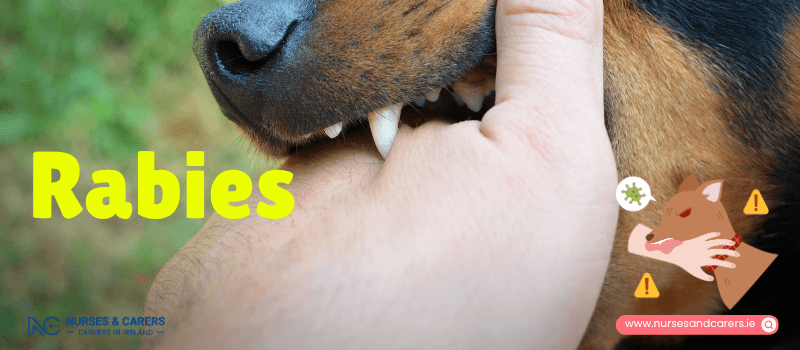
Rabies
17 Sept 2026 · 6 min read
On this page21 sections
Rabies is a rare, viral brain infection spread by infected mammals that is 100% preventable if treated early, but nearly always fatal once symptoms appear. While highly uncommon in Ireland (where the only minor risk comes from bats), it remains prevalent across parts of Asia, Africa, and Central/South America.
Urgent Action Required
Seek immediate emergency medical care (visit an Emergency Department or request an urgent GP appointment) if:
A bat bites, scratches, or spits on you in Ireland.
Any animal bites, scratches, or spits on you while you are abroad.
An animal licks your eyes, nose, mouth, or an open wound while abroad.
Note: Do not wait until you return to Ireland to seek help; seek local treatment immediately.
How Rabies Spreads
The virus transfers from infected mammals (like dogs, bats, raccoons, and foxes) via:
Bites or scratches.
Saliva landing in the eyes, nose, mouth, or open wounds.
Key Symptoms
Symptoms typically surface within 3 to 12 weeks, though they can take days or even years to appear. Watch for:
Numbness or tingling at the injury site.
Extreme anxiety or sudden bursts of energy.
Hallucinations (seeing things that are not there).
Difficulty breathing or swallowing.
Paralysis (inability to move).
Who is at Risk?
Travellers: Anyone visiting high-risk global regions (check guidelines on TravelHealthPro).
High-Exposure Workers: Laboratory staff handling the virus, veterinary professionals, zoo/wildlife workers, or healthcare staff treating infected patients.
Prevention and Treatment
Rabies cannot be cured after symptoms begin, making rapid post-exposure medical care vital—even if you have been previously vaccinated.
Standard Treatment Includes:
The Rabies Vaccine: A multi-dose course to stimulate immunity.
Human Rabies Immunoglobulin (HRIG): A liquid medicine injected directly into the wound site. This is only given to individuals who have a weakened immune system or have never received a rabies vaccine before.
Follow-Up Care: If you start treatment abroad, contact your Irish GP immediately upon your return to confirm if further doses are required.
Safety Rules for Travellers
Do's | Don'ts |
|---|---|
Visit a travel clinic 8 weeks before your trip. | Do not touch wild, stray, or domestic animals. |
Locate medical facilities at your destination early. | Do not assume a calm, healthy-looking animal is safe. |
Wash wounds immediately with soap and clean water. | Do not visit zoos or sanctuaries without professional barriers. |
Get medical help without delay if exposed. | Do not wait to return home before seeking treatment. |
Medical Guide: Understanding the Rabies Vaccine
The rabies vaccine provides critical defense against the rabies virus. It works by preventing infection before exposure occurs and stopping the onset of fatal symptoms if an individual is exposed to the virus.
Emergency Action: Suspected Exposure
Seek immediate emergency medical care (visit an Emergency Department or request an urgent GP appointment) if:
A bat bites or scratches you in Ireland.
Any animal bites, scratches, or spits on you while you are abroad.
An animal licks your eyes, nose, mouth, or an open wound while you are abroad.
Note: If you are abroad, seek local medical help immediately. Do not wait until you return to Ireland. The vaccine does not provide 100% protection; immediate post-exposure treatment is always required, even for fully vaccinated individuals.
Who Needs the Vaccine?
Routine rabies vaccination is not provided to the general public. It is strictly reserved for individuals under the following circumstances:
1. High-Risk Travellers
Vaccination is highly recommended if you are travelling to global regions where rabies is common (verify destinations on TravelHealthPro), especially if you meet any of the following criteria:
Your trip will last longer than one month.
You plan to engage in outdoor activities like running or cycling, which increase animal interaction risks.
You are visiting remote areas where immediate medical assistance is unavailable.
2. Occupational Exposure
Workers who face a direct risk of rabies exposure must speak with their employers regarding vaccination. This includes laboratory personnel handling the virus, veterinary professionals, and wildlife or sanctuary workers.
Vaccine Administration and Schedules
The rabies vaccine contains a deactivated (dead) form of the virus. It cannot cause rabies. It can be safely administered alongside other routine travel vaccines.
Standard Schedule: The vaccine is given as an injection. The full primary course requires 3 doses spread over a 28-day period.
Accelerated Schedule: If travel is imminent, the 3 doses can be compressed into a 21-day or 7-day schedule, though a 7-day schedule requires a future booster dose.
Timeline Constraint: Consult a travel health clinic at least 8 weeks before departure to ensure adequate time to complete the vaccine series.
Booster Requirements
Travellers: Most travellers do not require boosters. A single booster dose may be recommended if you visit a high-risk area and it has been more than 1 year since your primary course.
Occupational Workers: Typically require a booster 1 year after the initial course, followed by regular booster doses every few years to maintain continuous protection.
Safety, Eligibility, and Allergies
Most individuals can safely receive the rabies vaccine, including infants, children, pregnant women, breastfeeding mothers, and immunocompromised individuals.
Allergy Warning: Rabies vaccines may contain trace amounts of egg protein or specific antibiotics (polymyxin B, streptomycin, and neomycin). Inform your healthcare provider before vaccination if you have severe allergies to any of these components.
Potential Side Effects
Most side effects are minor and resolve quickly. Common reactions include:
Pain, redness, or swelling at the injection site
Headache
Fever (38°C or higher)
Nausea or vomiting
An itchy, raised rash (hives)
Note: Severe allergic reactions are extremely rare. Contact your GP if you experience severe or worrying symptoms.
Where to Access the Vaccine
Travel vaccinations are not free. Patients must pay out-of-pocket at the following locations:
Private travel health clinics
Pharmacies offering travel health services
Participating GP surgeries
Disclaimer
The information provided here is for educational and informational purposes only. It does not constitute medical advice, diagnosis, or treatment. Always consult a qualified healthcare professional or your GP for specific medical concerns, diagnoses, or health advice. Never disregard professional medical advice or delay seeking it because of information you have read here.