
External (Male) Condom
10 Sept 2026 · 3 min read
On this page9 sections
Clinical Efficacy
Perfect Use: 98% effective when utilized correctly and consistently every time you have sex.
Typical Use: 82% effective when not always used correctly or consistently during intercourse.
What Is It?
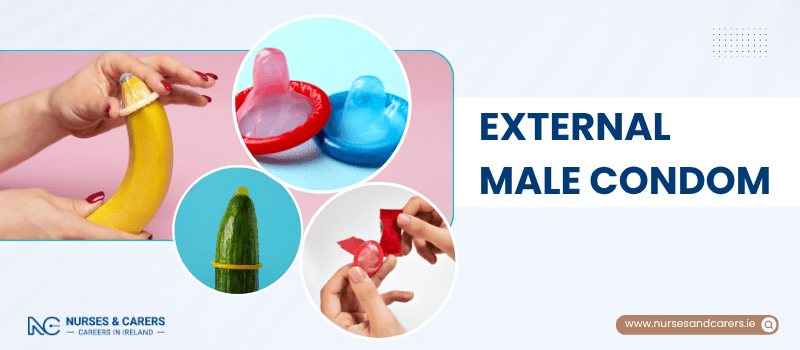
The external condom is a flexible barrier device rolled over an erect penis prior to sexual contact. It is designed to capture semen, preventing pregnancy, while significantly reducing the transmission of sexually transmitted infections (STIs), including HIV. Most external condoms are manufactured from latex.
Step-by-Step Application and Removal
Opening: Carefully remove the condom from its packaging. Avoid tearing it with sharp fingernails or jewelry. Never open the packet with your teeth.
Orientation: Locate the reservoir tip (teat) at the end. Gently pinch the teat between your thumb and forefinger to expel trapped air and ensure it faces the correct direction to unroll.
Application: Place the condom onto the tip of the erect penis while continuing to hold the teat. Gently roll the sheath all the way down to the base of the penis.
Correction Note: If the condom fails to unroll, it is upside down. Discard it immediately—as it may have collected pre-ejaculatory fluid containing sperm—and open a new one.
Withdrawal: Immediately after ejaculation and while the penis is still erect, withdraw carefully. Securely hold the rim of the condom at the base of the penis during withdrawal to prevent slippage.
Disposal: Slide the condom off without spilling any semen. Wrap it in a tissue and dispose of it in a waste bin. Do not flush condoms down the toilet.
Subsequent Contact: Ensure the penis does not make contact with the partner's genital area after removal. If you engage in intercourse again, always use a brand-new condom. Condoms are strictly for single use only.
Advantages and Disadvantages
👍 Benefits: Widely accessible over-the-counter without a prescription; requires zero hormonal intake; enables mutual contraceptive responsibility; provides dual protection against both pregnancy and STIs; free from medical side effects.
👎 Limitations: Requires practice for consistent correct usage; can slip if the penile base is not secured during withdrawal; prone to tearing if handled roughly or paired with oil-based lubricants (e.g., Vaseline, body lotions); reliant on verifying expiry dates on the packaging before use.
2. The Internal (Female) Condom
Clinical Efficacy
Perfect Use: 95% effective when inserted and used correctly every single time.
Typical Use: 79% effective under standard or inconsistent everyday use.
What Is It and How Does It Work?
The internal condom is a thin, flexible plastic pouch inserted carefully into the vagina prior to intercourse. It lines the vaginal canal, creating a durable physical barrier that blocks sperm from entering the cervix and womb, while simultaneously offering robust protection against STIs and HIV.
Advantages and Disadvantages
👍 Benefits: Can be inserted well in advance of sexual activity so intercourse is not interrupted; alternative hormone-free option; protects both partners from STIs when used correctly; can be safely paired with other contraceptive methods (e.g., the oral pill) for maximum protection—a practice known clinically as "Double Dutch."
👎 Limitations: Requires manual dexterity and practice to master correct anatomical insertion; significantly less accessible and harder to find in retail pharmacies compared to external male condoms.
Disclaimer
The information provided here is for educational and informational purposes only. It does not constitute medical advice, diagnosis, or treatment. Always consult a qualified healthcare professional or your GP for specific medical concerns, diagnoses, or health advice. Never disregard professional medical advice or delay seeking it because of information you have read here.