
Toe Pain
18 Sept 2026 · 4 min read
On this page2 sections
Overview and Self-Care
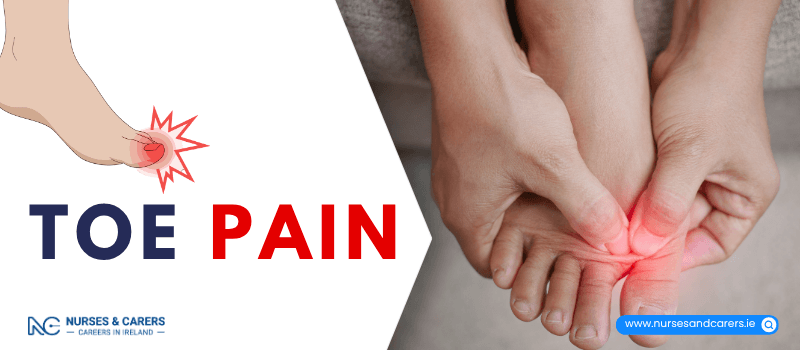
Toe pain is a common issue with a wide variety of causes, ranging from minor friction to sudden injuries. Most mild cases can be successfully managed at home and will improve with rest. However, if the pain persists, professional medical advice should be sought.
How to Ease Toe Pain at Home
If you experience mild toe pain or consult a doctor for a minor issue, the standard clinical approach involves the following steps:
Do
Rest and Elevate: Rest your foot as much as possible and keep it raised when sitting or lying down.
Cold Therapy: Apply an ice pack (or a bag of frozen peas wrapped in a towel) to the toe for up to 20 minutes every 2 to 3 hours.
Footwear Adjustments: Wear wide, comfortable shoes with a low heel and a supportive, cushioned sole to reduce pressure.
Pain Management: Take paracetamol to help manage the discomfort.
Buddy Strapping: If you suspect a minor break in a smaller toe, place a small piece of cotton wool or gauze between the sore toe and the adjacent toe, then use tape to loosely strap them together. Note: Do not do this for a big toe or a severely displaced fracture.
Movement: Practice regular, gentle stretching exercises once the acute pain subsides.
Don't
Avoid Early Ibuprofen: Do not take ibuprofen for the first 48 hours immediately following a sudden injury, as it can interfere with early healing.
Limit Strenuous Activity: Do not walk or stand for extended periods.
Avoid Constricting Footwear: Do not wear high heels, tight shoes, or pointy-toed footwear.
Consulting Your Pharmacist
A pharmacist is an accessible first point of contact for toe discomfort. They can provide advice on:
Choosing the most appropriate painkiller for your situation.
Selecting corrective insoles or protective pads for your shoes.
Treating common skin or nail conditions affecting the toes.
Determining whether your symptoms require a GP visit.
Common Causes of Toe Pain
The most frequent culprits behind a sore toe are sudden over-exercising or wearing ill-fitting footwear. Your specific symptoms can help narrow down the underlying issue:
Symptoms | Potential Cause |
|---|---|
Pain, redness, and swelling around the edge of the nail; the nail curls into the skin. | Ingrown toenail |
A hard, bony deformity or lump forming near the joint of the big toe. | Bunion |
Pain, tingling, and numbness triggered by cold temperatures or stress; toes may turn white or blue. | Raynaud’s phenomenon or chilblains |
Sudden pain, swelling, dark bruising, and significant difficulty walking after an impact. | Broken toe (fracture) |
Abrupt, severe pain, intense stiffness, and hot, red, swollen skin directly around a toe joint. | Gout |
When to Seek Medical Evaluation
Disclaimer: This information is for educational purposes. Foot issues can escalate quickly, particularly in individuals with underlying metabolic conditions. Always consult a clinician for a formal diagnosis.
Schedule a Non-Urgent GP Appointment if:
· The pain is severe enough to stop you from performing normal, daily activities.
· The pain is progressively getting worse or keeps returning.
· Your symptoms have not improved after 2 weeks of consistent home treatment.
· You experience numbness, tingling, or a loss of sensation in any part of your foot.
· You have diabetes. Foot complications are significantly more serious if you have diabetes and require prompt professional monitoring.
Go to the Nearest Emergency Department (ED) if:
You have sustained an injury and experience any of the following signs of a severely broken toe:
· You have badly injured your big toe specifically.
· The pain is excruciating or makes you feel faint, dizzy, or physically sick.
· The toe is visibly deformed or pointing out at an unnatural angle.
· You heard or felt a distinct snap, grind, or pop at the exact moment of injury.
· You completely lose the ability to move your toes or bear weight to walk.
Disclaimer
The information provided here is for educational and informational purposes only. It does not constitute medical advice, diagnosis, or treatment. Always consult a qualified healthcare professional or your GP for specific medical concerns, diagnoses, or health advice. Never disregard professional medical advice or delay seeking it because of information you have read here.