
Varicose Eczema
18 Sept 2026 · 7 min read
On this page18 sections
Varicose eczema is a long-term skin condition that develops on the lower legs. It occurs due to circulatory issues within the leg veins, such as varicose veins or a history of blood clots. Also known as venous, gravitational, or stasis eczema, the condition causes chronic skin dryness and irritation but can be effectively managed with targeted treatment.
Symptoms of Varicose Eczema
The appearance of varicose eczema varies based on skin tone, and symptoms can fluctuate, sometimes improving before flaring up again.
Skin Surface Changes
The skin becomes intensely itchy, swollen, dry, and flaky.
It may develop a scaly, crusty texture or form small fluid-filled blisters.
Color Changes: On lighter skin tones, the affected areas typically look red or brown. On black or brown skin, changes may appear dark brown, purple, or grey, making them more subtle and difficult to see.
Accompanying Leg Symptoms
Swollen Legs: Mild to severe swelling that usually worsens toward the end of the day or after prolonged periods of standing.
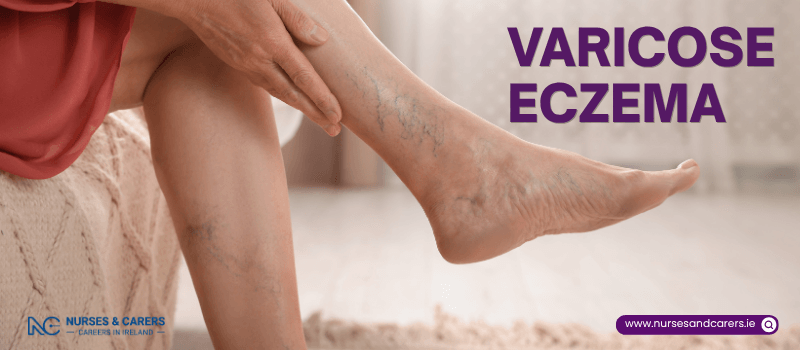
Varicose Veins: Visibly swollen, twisted, and enlarged veins.
Sensation: A heavy, achy, or constantly tired feeling in the legs.
Scars: The appearance of tiny, white, smooth scars on the lower leg (known as atrophie blanche).
Skin Damage: A personal history of slow-healing leg ulcers or eczema spreading to other parts of the body.
Non-Urgent Advice: Contact a GP if the skin on your lower legs becomes persistently itchy, swollen, dry, flaky, or blistered.
Causes of Varicose Eczema
Varicose eczema is directly linked to poor blood circulation in the lower limbs.
Valve Malfunction: Healthy leg veins contain tiny one-way valves that pump blood upward against gravity toward the heart. When these valves weaken or fail, blood pool backward down into the lower leg.
Increased Pressure: This backward flow causes the leg veins to stretch, swell, and experience high internal blood pressure.
Fluid Leakage: The intense pressure forces tiny amounts of fluid to leak out of the veins and into the surrounding leg tissues.
Immune Response: The body’s immune system reacts to this misplaced fluid, triggering localized inflammation that manifests as eczema on the surface of the skin.
Who Is Most at Risk?
While it can occasionally develop for no apparent reason, varicose eczema is most common in individuals aged 70 or older. You are at an increased risk if you have a medical history of:
Varicose veins
Deep Vein Thrombosis (DVT) or other blood clots
Chronic, long-term leg swelling (oedema)
Recurring episodes of cellulitis (a deep skin infection)
Diagnosis and Specialist Referrals
What to Expect at Your GP Appointment
A GP can standardly diagnose varicose eczema simply by examining the skin on your legs. To understand the underlying cause, they will ask if you have a history of leg injuries, surgeries, ulcers, or blood clots.
Your doctor will also likely check the pulses in each of your feet to evaluate your arterial blood flow. This is a crucial step to determine whether it is safe for you to wear compression stockings.
When You May Be Referred to a Specialist
Your GP may refer you to a vascular specialist (a doctor specializing in blood vessels) or a dermatologist (a skin specialist) if:
You have a combination of varicose veins and skin changes (like eczema or active ulcers).
There are signs of a developing leg ulcer or severe blood flow problems.
There are indications of contact dermatitis (an allergic skin reaction).
Your symptoms fail to improve after trying standard first-line treatments.
Treating Varicose Eczema
For most individuals, successfully managing varicose eczema requires a combination of active lifestyle adjustments, intensive moisturising, medical creams, and compression therapy.
1. At-Home Self-Help Strategies
Improving the underlying blood circulation in your legs and protecting your skin are vital steps to prevent complications like slow-healing leg ulcers.
Do's:
Elevate Your Legs: Whenever you are sitting or resting, raise your legs so that your feet sit higher than the level of your heart.
Stay Physically Active: Engage in regular exercise, such as walking, to naturally pump blood back up your legs.
Keep Moving: If you must sit or stand for long periods, move your legs frequently by flexing your feet, rising up onto your toes, or gently bending your knees.
Perform Sitting Exercises: If you have reduced mobility, simple seated foot and leg movements can still help stimulate blood flow.
Protect Your Skin: Take extreme care to avoid scratching, bumping, or scraping your lower legs, as poor circulation makes the skin highly vulnerable to deep ulcers.
Adopt Healthy Habits: Eat a balanced diet and take active steps to quit smoking, as smoking severely restricts your blood circulation.
2. Intensive Moisturisers (Emollients)
Emollients are therapeutic moisturisers that lock in hydration and cover your lower legs with a protective barrier.
Frequency: Apply your emollient at least twice a day, even when your skin looks completely clear and symptom-free.
During Flares: Do not stop using your moisturiser when your eczema worsens; a flare-up is exactly when your skin needs intensive hydration the most.
Finding the Right One: Your GP can recommend a suitable option. You may need to try a few different brands to find the one that works best for your skin type.
3. Prescription Creams (Topical Corticosteroids)
If moisturisers alone cannot soothe the irritation, your GP may prescribe a topical corticosteroid cream or ointment to quickly reduce localized swelling, redness, and itching.
Application Guidance: Always follow your doctor's exact instructions on how much and how often to apply the medication.
Layering Order: If you are using both a steroid cream and an emollient, apply the corticosteroid first and let it absorb completely. Wait at least 10 minutes before applying your regular moisturiser over the top.
4. Compression Stockings
Compression stockings physically squeeze the lower legs—with the tightest pressure at the ankle, gradually loosening further up the leg—to force pooled blood upward toward the heart.
Daily Routine: To get the best results, pull the stockings on as soon as you get out of bed in the morning. Leave them on all day, and only remove them right before you go to sleep at night.
Finding Your Match: Stockings come in a variety of styles, sizes, and pressure strengths. While light options (like travel flight socks) can be bought over the counter at pharmacies, higher medical grades require a precise fit. Your GP clinic or pharmacy can measure your legs to ensure you receive the correct size and supply tools to help you slide them on and off easily.
Specialty Referrals & Alternative Therapies
Treating Co-Existing Conditions
Your GP will manage your initial care but may refer you to a dermatologist (skin specialist) or a vascular surgeon(blood vessel specialist) if you have severe, bulging varicose veins, if they suspect you have contact dermatitis (an allergic reaction), or if your skin fails to improve after standard treatment.
A Note on Complementary Therapies
While some people explore alternative remedies to treat eczema, there is currently very little clinical evidence proving they provide any benefit. Always consult your GP before trying alternative treatments to ensure they do not react poorly with your prescribed medical routine.
Disclaimer
The information provided here is for educational and informational purposes only. It does not constitute medical advice, diagnosis, or treatment. Always consult a qualified healthcare professional or your GP for specific medical concerns, diagnoses, or health advice. Never disregard professional medical advice or delay seeking it because of information you have read here.