
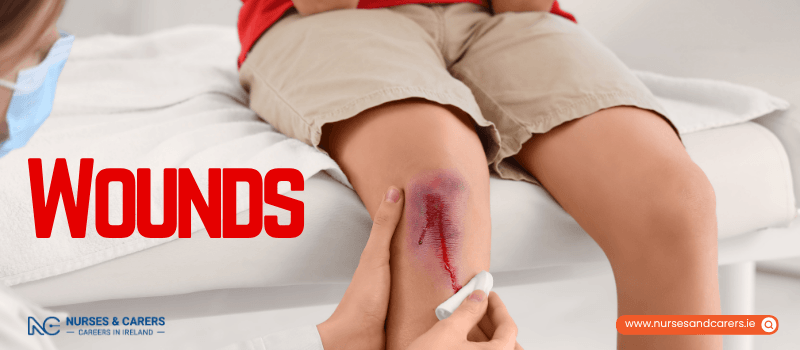
Wounds
18 Sept 2026 · 6 min read
On this page10 sections
Applying plasters and other dressings
You can treat most simple cuts, grazes and small wounds at home with a plaster or dressing. If the wound is severe, you may need to go to an injury unit after you put on the dressing.
Before you put on a plaster or dressing
Take the following preparatory steps before addressing the wound:
Wash and dry your hands, and wear disposable gloves if you have them.
Sit or lie down if the cut or wound is bleeding.
Apply pressure to the area if it is bleeding, raising the affected area above the level of the heart if possible.
Follow standard advice on how to clean a wound.
Always use a dressing that is slightly bigger than the wound you want to cover. Hold the dressing at the edges and keep your fingers away from the part that covers the wound.
If you are treating someone else:
Tell them what you're doing and ask them to sit or lie down.
Ask them if they are allergic to any items you need to use, such as adhesive plasters.
Plasters (adhesive dressings)
Plasters are made from a piece of gauze with a sticky (adhesive) back, usually arriving in single sterile packs. They come in different shapes and sizes, can be cut to size, and some variants are waterproof.
When you put on a plaster:
Clean and dry the wound and surrounding skin.
Unwrap the plaster and hold it by the protective strips with the pad facing down.
Peel back the strips but do not remove them fully.
Place the pad on the wound.
Pull away the remaining strips and press down the edges of the plaster.
Replace the plaster if it gets dirty, wet, or if blood soaks through it.
Bandages with sterile dressing pads
Some sterile dressing pads come with a bandage attached on either side, which is also known as a wound dressing. The bandage is shorter on one side of the pad than the other . Once you remove the wrapping, the dressing is no longer sterile.
Before you start, check which side of the pad to place against the wound, then clean and dry the wound and the surrounding skin.
To put on a wound dressing:
Hold the bandage on either side of the pad.
Lay the pad directly on top of the wound.
Wrap the short part of the bandage around the limb and the pad one time.
Wrap the long part of the bandage around the limb until it completely covers the pad.
Tie the ends of the bandage together directly over the pad, applying slight pressure to the wound
Replace the dressing every day until you can see that the wound is healing.
Urgent advice: Go to an injury unit with any cut or wound that:
Is more than 1cm long in a child.
Is more than half a centimetre deep, especially if you can see yellow fat in the cut.
Gapes wide open.
Is located on the wrist, the front of the elbow, or near the genitals.
Includes deep cuts located on the hand or fingers.
Does not stop bleeding after about 10 minutes, even with continuous pressure.
Does not stop bleeding and you regularly take blood-thinning medicines.
Is on the face, especially around the eyes and the mouth.
Contains dirt, rust, or debris in it.
Is caused by a human or animal bite.
Emergency Note: If you cannot stop the bleeding under any circumstances, go to your nearest emergency department (ED) as soon as possible.
Cleaning a wound
You can treat most simple cuts, grazes and small wounds at home with a plaster or dressing. For more serious cuts and wounds, you may need to get medical help.
Urgent advice: Go to an injury unit if the wound:
Does not stop bleeding.
Is very large or very deep.
Contains dirt or has something stuck in it.
Is too painful for you to clean well.
Is near to a major blood vessel or joint.
Becomes painful, tender, swollen or warm.
Has pus coming out.
Was caused by a bite, as all bites need medical attention.
How to clean a wound
It's important to clean a wound before you put on a plaster or dressing. Cleaning reduces the risk of infection and helps the healing process.
Before you clean a wound
Take these steps before cleaning:
Wash and dry your hands.
Wear disposable gloves if you have them.
Apply pressure to the area if it is bleeding, and raise the affected area above the level of the heart if possible.
Check if anything is stuck in the wound.
Important: Do not try to remove anything that is stuck in the wound . Get medical advice instead.
Cleaning a wound
If you are treating someone else, tell them what you're doing and ask them to sit or lie down.
To clean a wound:
Hold the wound under running tap water for 5 to 10 minutes.
Soak a gauze dressing or a clean cloth in tap water or saline solution (salt water).
Dab or wipe the area gently with the wet dressing or cloth.
Gently pat the area dry using a clean towel or tissues.
Apply a sterile, non-stick pad to the wound.
Cover the pad with a bandage or waterproof plaster.
Do not use:
Non-sterile, alcohol-free wipes, as they may contain bacteria that can cause infection .
Anything fluffy that could stick to the wound, such as cotton wool .
If the wound keeps bleeding
A plaster or larger dressing is usually all that you need to stop a wound bleeding. If blood soaks through the dressing:
Leave the current dressing in place.
Apply pressure to the wound for a few minutes.
Add another dressing on top.
Get medical advice if the wound does not stop bleeding after you apply pressure for 10 minutes, or if you take blood-thinning medicines .
Disclaimer
The information provided here is for educational and informational purposes only. It does not constitute medical advice, diagnosis, or treatment. Always consult a qualified healthcare professional or your GP for specific medical concerns, diagnoses, or health advice. Never disregard professional medical advice or delay seeking it because of information you have read here.