
Obstructive Sleep Apnoea (OSA)
17 Sept 2026 · 9 min read
On this page36 sections
Overview
Obstructive Sleep Apnoea (OSA) is a chronic sleep disorder characterized by repeated pauses in breathing during sleep. This occurs when the throat muscles relax and temporarily collapse, blocking the upper airway. Left untreated, OSA disrupts sleep architecture, diminishes daily quality of life, and elevates risks for cardiovascular complications.
Symptoms of Obstructive Sleep Apnoea
Because these symptoms happen during sleep, individuals with OSA are often unaware of them. Typically, a bed partner, family member, or housemate is the first to observe the signs.
Nocturnal Signs (While Sleeping)
Loud, persistent snoring.
Labored, noisy breathing.
Noticeable, prolonged gaps between breaths.
Sudden gasping, choking, or snorting sounds.
Frequent night sweats.
Waking up multiple times overnight to urinate.
Daytime Signs (While Awake)
Excessive daytime sleepiness and fatigue.
Poor concentration or morning headaches.
Unintentionally falling asleep during the day.
The Diagnostic Process
1. Primary Care Assessment (GP Consultation)
Your GP will evaluate your symptoms, calculate your daytime sleepiness level, and review your medical history. To rule out alternative causes of chronic fatigue, the clinical assessment includes:
Blood Pressure Check: OSA is highly correlated with hypertension.
Blood Panels: Used to screen for mimicking conditions, such as an underactive thyroid gland (hypothyroidism).
Specialist Referral: If OSA is suspected, your GP will refer you to a tertiary sleep clinic.
2. How to Assist with Your Diagnosis
Enlist a Witness: Ask a partner or friend to monitor your sleeping patterns for breathing pauses or gasps.
Maintain a Sleep Diary: Document your bedtime hours, night waking frequencies, daytime fatigue levels, and any instances of drifting off.
Specialized Sleep Testing
Sleep specialists use diagnostic tests to confirm OSA and measure its severity. Testing occurs either overnight at a sleep clinic or via a portable kit used at home.
Clinical Polysomnography (In-Lab Sleep Study)
This comprehensive, overnight laboratory evaluation continuously records your physiological data:
Brain wave activity (EEG) to track sleep stages.
Eye movements and muscle tone.
Continuous heart rate and rhythm (ECG).
Airflow from the nose and mouth, along with breathing effort.
Blood oxygen saturation levels.
Audio and video recordings to log snoring and physical movement.
Home Sleep Apnoea Testing
The clinic provides a portable, simplified monitoring device. You will be instructed how to apply the sensors before bed. The unit records:
Blood oxygen levels.
Respiratory movement and airflow.
Heart rate.
Snoring intensity and frequency.
Understanding Severity: The AHI Score
The severity of OSA is clinically classified using the Apnoea-Hypopnoea Index (AHI). This metric counts the average number of breathing pauses (apnoeas) or partial airway collapses (hypopnoeas) you experience per hour of sleep. Your tailored treatment plan will be based directly on this score.
AHI Score (Episodes Per Hour) | Severity Level |
|---|---|
5 to 14 | Mild |
15 to 30 | Moderate |
Greater than 30 | Severe |
When to Seek Medical Help
Contact Your GP (Non-Urgent)
Schedule an appointment if you or a partner identify signs of interrupted nighttime breathing, chronic loud snoring, or if you struggle with persistent, unexplained daytime exhaustion.
Causes
Obstructive Sleep Apnoea (OSA) occurs when the structural walls of the throat over-relax and collapse during sleep, restricting or completely blocking airflow. While transient muscle relaxation is a normal part of sleep, certain physical and anatomical factors cause the airway to narrow to a degree that disrupts breathing.
Anatomical and Physiological Causes
Excess Body Weight
Carrying extra weight is a primary risk factor for developing airway collapse:
Neck Adiposity: Excess fat tissue deposited around the neck directly compresses the airway and strains the throat muscles, making them prone to collapsing inward.
Abdominal Pressure: Too much stomach fat physically pushes against the diaphragm and lungs, decreasing lung volume and aggravating breathing difficulties overnight.
Structural and Upper Airway Anatomy
Your baseline craniofacial and airway structure heavily dictates your risk:
Neck Circumference: Men with a collar size greater than 43 cm (17 inches) face a significantly elevated risk of developing airway blockages.
Soft Tissue Volume: Naturally large tonsils, a prominent adenoid pad, an enlarged tongue, or a naturally narrow pharyngeal airway can easily crowd the throat cavity.
Skeletal Layout: Having a small or recessed lower jaw (retrognathia) shifts the tongue backward, narrowing the posterior airway space.
Persistent Nasal Congestion: Chronic nasal blockages force mouth breathing, which destabilizes the upper airway. This frequently stems from structural issues inside the nose, such as a deviated septum (where the cartilage wall separating the nostrils is bent to one side).
Demographic and Lifespan Risk Factors
Biological Sex: OSA is statistically more prevalent in men. This disparity is frequently linked to sex-specific fat distribution patterns, where men tend to accumulate more tissue around the upper torso and neck.
Age Variations: While airway collapse can happen at any stage of life, the risk accelerates substantially in individuals over the age of 40 as tissue elasticity naturally declines.
Menopause: The sharp decline in hormone levels during menopause directly reduces the baseline muscle tone of the throat tissues, leaving post-menopausal women highly vulnerable to sleep apnoea.
Genetics: Structural airway dimensions, jaw shapes, and obesity tendencies are hereditary traits passed down through families.
Chemical and Lifestyle Aggravators
Alcohol Intake: Consuming alcohol—especially in the hours leading up to bedtime—acts as a potent central nervous system depressant. This over-relaxes the upper airway muscles, increases snoring intensity, and directly triggers severe apnoea episodes.
Medications: Certain prescription drugs, such as sleeping tablets, sedatives, or muscle relaxants, replicate the depressant effects of alcohol by heavily relaxing the throat tissue.
Smoking: Tobacco smoke causes severe, localized inflammation and swelling within the delicate lining of the upper airway, narrowing the breathing passage.
The Mechanics of Airway Obstruction
When the soft tissues and muscles of the throat relax, they produce two distinct types of respiratory events that can recur dozens of times per hour:
1. Apnoea (Complete Obstruction)
An apnoea event occurs when the upper airway becomes 100% blocked, halting all airflow completely for a minimum duration of 10 seconds or longer.
2. Hypopnoea (Partial Obstruction)
A hypopnoea event occurs when the airway is partially blocked, restricting normal airflow by approximately half for a minimum duration of 10 seconds or longer.
Co-occurring Syndromes
Obstructive Sleep Apnoea-Hypopnoea Syndrome (OSAHS): Most individuals experience a combination of both complete (apnoea) and partial (hypopnoea) events throughout the night. In severe cases, these transitions happen every 1 to 2 minutes.
Central Sleep Apnoea (Distinct Type): Unlike OSA, which is a physical blockage, central sleep apnoea is a neurological condition where the brain temporarily stops sending the necessary signals to the muscles that control breathing.
Treatment
Treatment for Obstructive Sleep Apnoea (OSA) depends on whether the condition is mild, moderate, or severe. Mild cases often resolve with daily routine adjustments or oral appliances. Moderate-to-severe cases typically require mechanical airway support, while surgery remains a rare, final resort.
Lifestyle Changes
For mild sleep apnoea, simple behavioral updates can reduce airway tissue collapse and improve sleep quality. Your doctor may advise you to:
Lose weight: Minimizes tissue volume around the neck to reduce airway compression.
Stop smoking: Eliminates localized chemical irritation and swelling in the throat.
Reduce alcohol intake: Prevents over-relaxation of the throat muscles, especially before bedtime.
Review medications: Work with your doctor to avoid sedatives or sleeping tablets that relax throat tissue.
Adjust sleeping positions: Sleep on your side to keep the tongue from falling backward.
Continuous Positive Airway Pressure (CPAP)
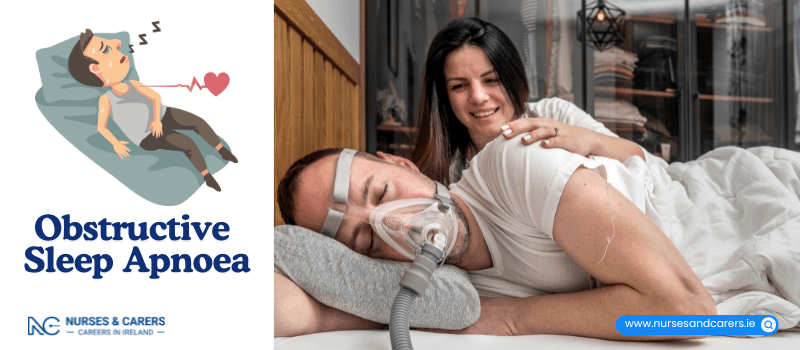
A CPAP machine is the standard medical treatment for moderate-to-severe OSA.
Mechanism: A small bedside pump delivers a continuous stream of compressed air through a mask over your nose, or your nose and mouth. This air pressure physically prevents your throat from closing.
Benefits: Resolves chronic snoring and daytime fatigue, while actively lowering the risk of long-term complications like high blood pressure.
Managing CPAP Side Effects
If you experience difficulties adapting to a CPAP machine, consult your care team. Common side effects include:
Mask discomfort or skin irritation.
Nasal congestion, a runny nose, or dry nasal passages.
Difficulty breathing through your nose.
Minor morning headaches or localized ear pain.
Stomach bloating, discomfort, or flatulence from swallowing air.
Financial Note: In Ireland, the Drugs Payment Scheme (DPS) can help subsidize or cap the monthly rental and equipment costs of a CPAP machine.
Mandibular Advancement Device (MAD)
A MAD is a customized oral appliance used primarily for mild OSA, or as an alternative for severe cases if a patient cannot tolerate a CPAP machine.
Mechanism: The device fits securely over your teeth, mechanically holding your lower jaw and tongue forward. This increases the physical space at the back of your throat to prevent narrowing.
Protocol: Must be evaluated and fitted by a dentist experienced in treating sleep apnoea.
Important: Inform your dentist if you have existing dental caps, crowns, or complex bridgework before a device is fitted.
Surgical Interventions
Surgery is rarely recommended. It is generally considered only if all non-invasive treatments fail to offer relief.
Tonsillectomy: Removal of abnormally large tonsils that physically block your nocturnal airway.
Adenoidectomy: Removal of enlarged adenoids (tissue behind the nose). This is primarily performed on children to clear their airway during sleep.
Bariatric (Weight Loss) Surgery: Restructuring the stomach to accelerate massive weight loss, which naturally relieves upper airway pressure in eligible candidates.
Soft Palate Implants: Insertion of small, stiffening implants into the roof of the mouth to stop heavy snoring vibrations. This is used only in rare clinical cases.
Tracheostomy: A major procedure where a surgeon creates an opening in the neck directly into the windpipe (trachea) and inserts a breathing tube. This is reserved strictly for severe, life-threatening cases.
Disclaimer
The information provided here is for educational and informational purposes only. It does not constitute medical advice, diagnosis, or treatment. Always consult a qualified healthcare professional or your GP for specific medical concerns, diagnoses, or health advice. Never disregard professional medical advice or delay seeking it because of information you have read here.